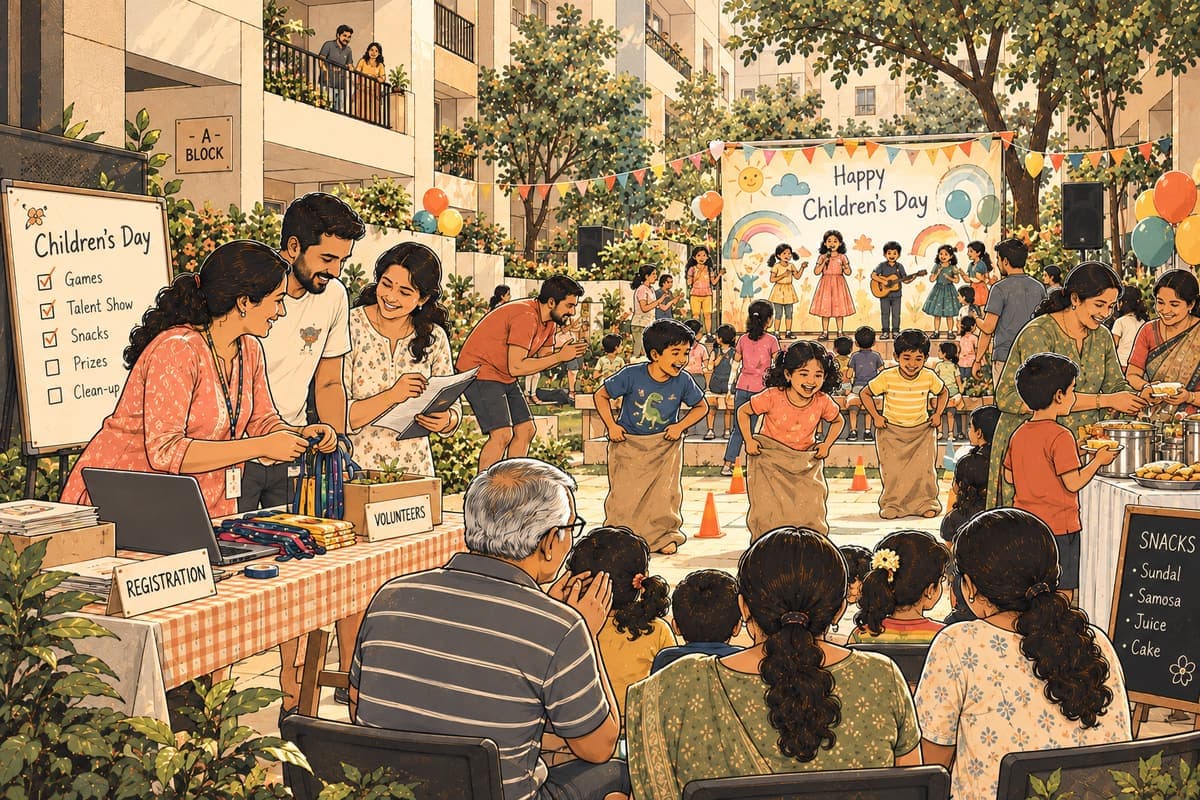
- Make Pongal shared with one pot per block or floor, and add Margazhi kolam contests in the cold months.
- Plan Vinayagar Chathurthi and a safer shared Diwali with one space, one time window and a clean-up team.
- Between festivals, one small monthly meetup like a coffee morning builds the lasting friendships.
India already has a calendar that brings people out of their homes. In January, bonfires crackle for Lohri in the north and pots of sweet rice boil over for Pongal in the south. In March, the whole society is out in white clothes for Holi. In August or September, a clay Ganesh idol sits under a shamiana at the corner, and in October or November, the whole colony is out with diyas and sparklers on Diwali night.
The festivals are already there. What most neighbourhoods are missing is a plan that runs across the whole year, so that the energy of one celebration carries into the next, and into the ordinary weekends in between.
This article walks through the year, festival by festival, with a simple idea for each one, and then shows how small weekend meetups can fill the gaps. Use it as a starting calendar for your apartment, street or colony, wherever you live in India.
January: a shared harvest festival in the common area
Lohri, Makar Sankranti and Pongal are the easiest events to host because almost everyone already knows what to do. The trick is to make it shared rather than forty separate families celebrating in forty flats.
A simple format that works in most apartment complexes:
- One fire or one pot per block. For Lohri, one safe bonfire in the open parking area is enough for everyone. For Pongal, ask each block to bring their own pot, rice and jaggery, and cook together on the terrace.
- Fix the time early. The bonfire lighting or the pot boiling over is the moment everyone wants to see. Pick a time, say 7 pm or 7 am, and announce it at least a week ahead.
- Something for kids. Children can fly kites for Sankranti, decorate a sugarcane stall, or draw rangoli with coloured powder.
- A group outing to finish. On the last day, a walk to a nearby park or lake keeps the mood going.
Keep the budget plain. Most families will happily bring their own food; the shared cost is usually just firewood or a gas stove, plates and a few decorations.
Festival mornings: a street rangoli contest
Festival mornings are made for a gentle competition. A street rangoli contest, or a pookalam contest for Onam, asks nothing of anyone except an early start and a bucket of colour or flowers.
How to run one without arguments:
| Decision | A simple answer |
|---|---|
| Who can enter? | Any household on the street; kids can enter a separate group |
| When? | One Sunday morning, drawing from 6 to 8 am |
| Who judges? | Two or three seniors from a different street, or a local art teacher |
| What do winners get? | A small brass lamp or a plant, bought from the shared kitty |
| What about rain? | Pick a backup Sunday and say so in the invite |
Ask everyone to photograph their rangoli before the first scooter rolls over it. Those photos become the best memory of the event, and a reason for next year's turnout to be bigger.
August or September: Ganesh Chaturthi without the stress
Ganesh Chaturthi brings the most joy and the most logistics. There is the idol, the pandal, the prasad, the pooja timing and, finally, the visarjan. Durga Puja committees face the same list a month later.
A few things that make it smoother:
- Decide the idol together. A clay idol is easier to immerse responsibly. A quick vote among households settles size and budget before anyone books.
- Collect contributions openly. Write down who gave what and share a simple account after the festival. Trust in the next collection depends on it.
- Make a duty list. Morning pooja, evening aarti, prasad, and cleaning up the pandal each need a name against them.
- Plan the visarjan route. Check whether your area has a designated immersion point and how the local authorities want it done that year.
If your street has families from different backgrounds, invite everyone to the evening aarti and the prasad. Many neighbours who would never join a committee will happily come for the food. The same open door works for an Eid sweets table or a Christmas carol evening.
October or November: a safer, shared Diwali night
Diwali in an apartment can be chaotic: crackers in the parking lot, kids too close to rockets, and seniors and pets frightened by the noise. A shared plan helps everyone.
- One open space, one time window. Agree on where crackers are allowed and for how long. People with elderly parents or pets will be grateful to know the timing.
- Buckets of water and sand. Put a volunteer in charge of them, and of first aid.
- A sweets exchange. Every family brings one box, and everyone leaves with a mix. It is cheaper than a catered event and far more personal.
- A clean-up team the next morning. Paper and shells everywhere is the least loved part of Diwali. Ten people with brooms for twenty minutes fix it.
The weekends in between
Festivals happen a handful of times a year. The friendships that make a neighbourhood feel like home are built on the quieter weekends. A good rhythm is one small thing a month:
- A Saturday morning walk around the lake in Whitefield, Bengaluru, or along the lakeside in Powai, Mumbai, or simply around your nearest park.
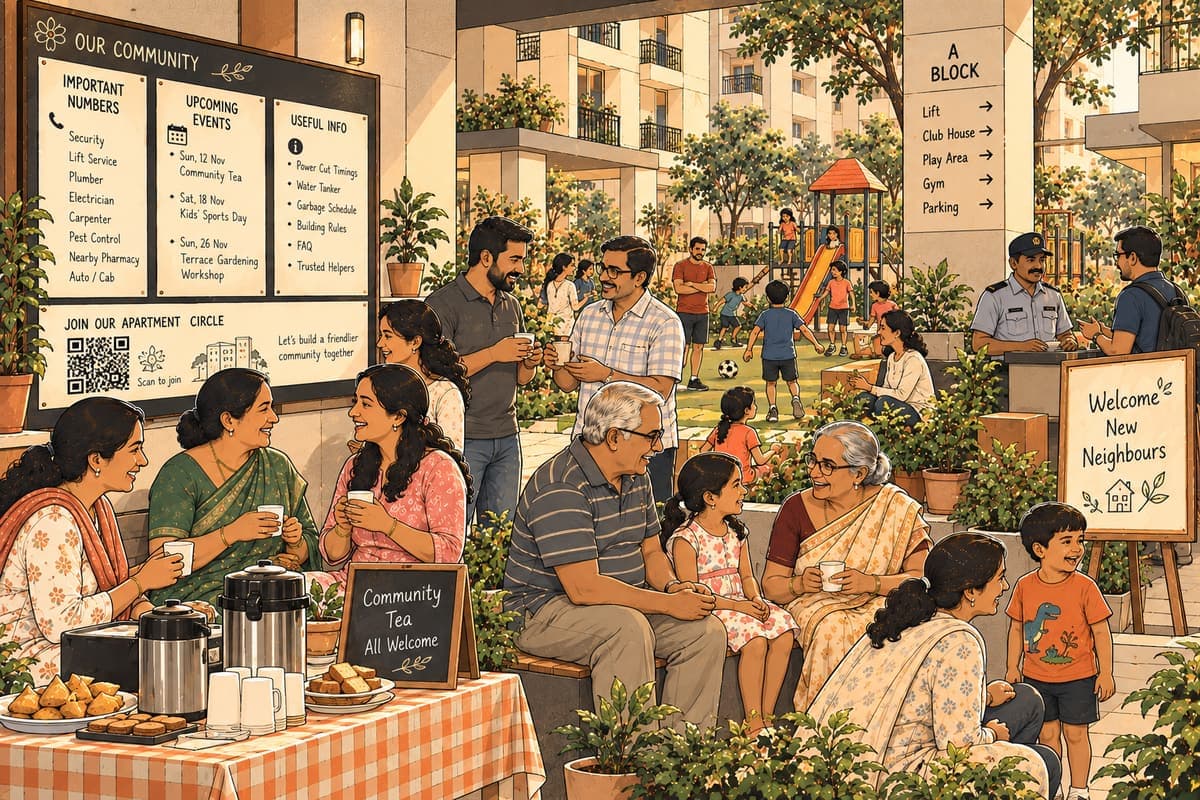
- A Sunday coffee or chai meet in the clubhouse, open to anyone who walks in.
- A board games evening for teenagers who are tired of their phones.
- A terrace movie night in the dry months, before the monsoon sets in.
None of these needs a committee. They need one person who picks a date, tells people, and turns up. If you want ideas for interest-based meetups like morning rides, read how morning rides and weekend meetups bring people together.
Where Zinola fits
Zinola is a free neighbourhood app and website for India, and it has a few tools that make this kind of yearly calendar easier to run.
- Plan an event. Anyone can host a public event for their area from the + menu with Plan an event. You pick a category such as Festival, Meetup, Kids, Food or Volunteering, add the date, place and details, and say whether it is good for kids, families, adults or seniors.
- What's on. Public events show up in the What's on part of Home for people nearby, so a rangoli contest on your street can be seen by neighbours you have never met. You can also browse the events page.
- Going, Maybe or Can't go. Neighbours tap a reply, so you get a rough headcount for the bonfire or the sweets exchange. You can set an optional capacity if space is tight.
- Questions to the host. "Can I bring my own pot?" or "Is the terrace accessible by lift?" go to you in one place instead of being scattered across chats.
- Add to calendar and reminders. People can add the event to their calendar, and Zinola reminds them when it is today and when it starts in about an hour.
- Inside your circle. If your apartment has a circle, you can run a private event for residents only, and use a poll to decide the idol size or the Diwali cracker window. In Apartment circles, polls count one vote per home.
One thing to know: if an event costs money, Zinola shows "free" or "paid" as information only. It does not sell entry or collect money; you sort that out directly with your neighbours.
Start small. Pick the next festival on the calendar, post it a fortnight ahead, and see who turns up. For a step-by-step on the organising itself, see how to bring neighbours together through local events.
Questions people ask
- How do we celebrate Pongal together in an apartment?
- Pick one open space such as the parking area or terrace, fix a time for the pots to boil, and ask each block or floor to bring its own pot and ingredients. Announce it at least a week ahead so families can plan.
- How do you judge a Margazhi kolam contest fairly?
- Invite two or three judges from outside the street, such as seniors from a nearby lane or a local art teacher, and keep a separate group for children. Agree the rules and a rain date in the invite.
- Can I sell entry to a festival event on Zinola?
- No. Zinola shows whether an event is free or paid as information only. It does not sell entry or take any payment, so any contribution is collected directly by the organisers.
- Can I post a festival event only for my apartment residents?
- Yes. Inside an apartment circle you can create a private event that only members see, with Going, Maybe or No replies and a count of how many are coming.
Put your next festival on the map
Post your Pongal, kolam contest or Diwali plan on Zinola so neighbours nearby can see it, reply and get a reminder on the day.
See what's on