- Decide what, when and for whom first, then split the work into small jobs that volunteers can say yes to.
- Keep the budget open, write down every expense and share the account with everyone afterwards.
- Write an invite that answers every question, and plan for seniors, young children and different food needs.
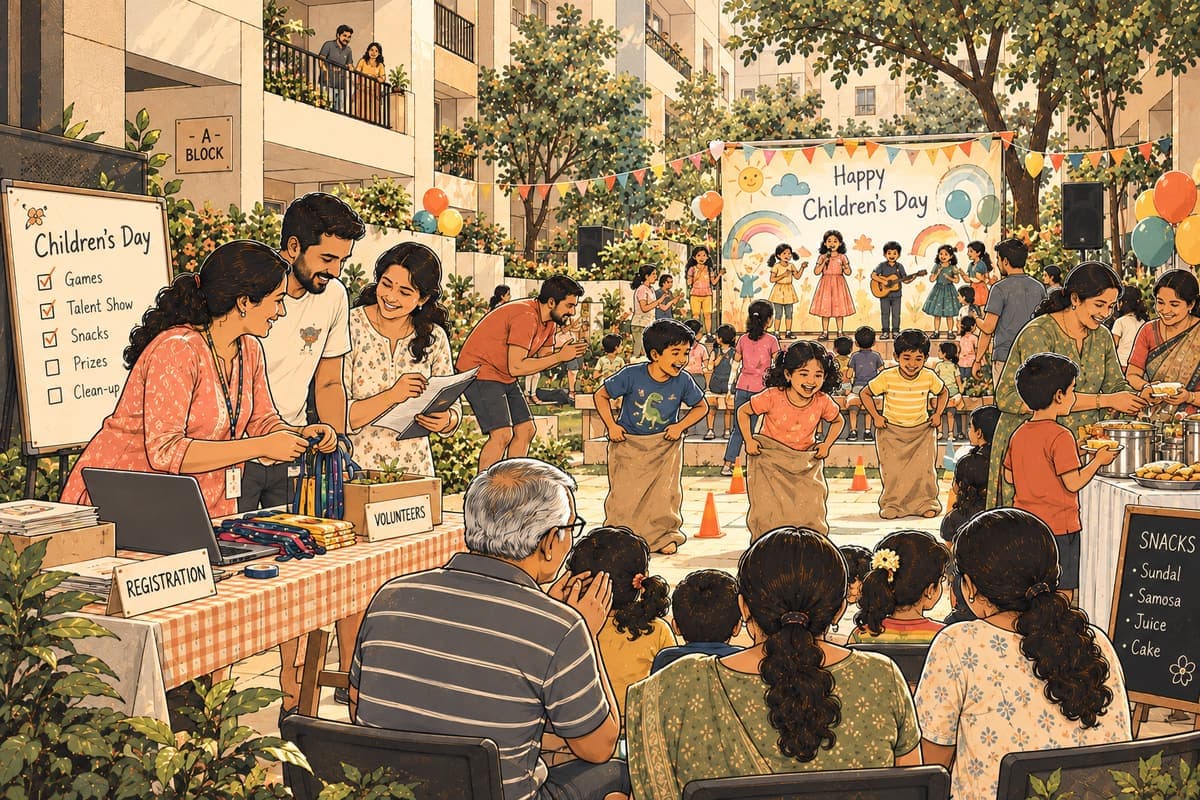
Most neighbourhood events start the same way. Someone at the gate says, "We should do something for Children's Day," everyone agrees, and then nothing happens. Nobody owns it, nobody fixes a date, and by the time someone remembers, the day has passed.
Organising a local event is not hard, but it does need one person to say "I'll do it" and a simple plan to follow. You do not need a committee, a sponsor or a big budget. You need a date, a place, a few helpers and a clear way to tell people.
This is a practical, step-by-step playbook for anyone who wants to organise a community event in their street, colony or apartment in Chennai, whether it is a first-time get-together or a festival your neighbours will remember.
Step 1: Decide what, when and for whom
Before you tell anyone, answer five questions on a single sheet of paper:
- What is it? A Children's Day sports morning, a Christmas carol walk, a monsoon-season first aid talk.
- Who is it for? Kids, families, seniors, everyone? This decides the time and the activities.
- When? Avoid exam weeks, long weekends when half the colony travels, and the heaviest monsoon weeks of November. Weekend mornings suit families; evenings suit working adults.
- Where? The park at the end of the street, the apartment clubhouse, the terrace, the community hall. Check you have permission from the association or whoever manages the space.
- How big? Fifteen people and sixty people need very different planning. Pick a number and plan for it.
If you are unsure what people want, ask. A quick poll with two or three options, "Sports morning or movie night?", gets a decision in a day and makes people feel part of it.
Step 2: Build a small team of volunteers
The single biggest mistake is trying to do everything yourself. Even a simple event needs a few hands. Break the work into small, clear jobs so people can say yes easily:
| Job | What it involves | Time needed |
|---|---|---|
| Space and setup | Chairs, mats, lights, extension cords | Event day, 1 hour before |
| Food and water | Tea, snacks, drinking water, cups | Shopping plus event day |
| Activities | Games, prizes, music, a mic if needed | A few evenings to prepare |
| Kids' corner | Keeping an eye on the little ones | During the event |
| Money | Collecting contributions, keeping receipts | Before and after |
| Clean-up | Bins, sweeping, returning chairs | 30 minutes after |
Ask people directly for one specific job. "Can you handle the water and cups?" gets a yes far more often than "Can someone help?". Teenagers are excellent volunteers for setup and games, and many retired neighbours enjoy managing the money or the guest list.
Step 3: Keep the budget simple and open
Money is where neighbourhood events most often go wrong, so be careful here.
- Start from zero. List what you truly need. Many things can be borrowed: chairs from the clubhouse, a speaker from a neighbour, a table from the temple.
- Decide how to fund it. A small per-family contribution, a "bring one dish" potluck, or a few households sponsoring prizes. Potlucks keep costs low and give everyone a role.
- Write everything down. Every rupee in, every rupee out, with bills where possible.
- Share the account afterwards. A simple list of income and spending, shared with everyone, builds trust for the next event.
- Return any surplus or carry it forward openly. Say clearly which one you are doing.
Step 4: Invite people the right way
Even a perfect event fails if people don't know about it. A good invite answers every question before it is asked:
- What it is and who it is for
- Date, start time and end time
- Exact place, with a landmark
- Whether it is free, or what the contribution is
- What to bring, if anything
- Whom to ask questions
Post it about two weeks ahead and remind people two days before and on the morning itself. Combine channels: a printed notice at the gate or lift, a message to your apartment group, and a word at the morning walk. Don't forget people who are not on any group: elderly residents, domestic workers' families, and new tenants who have not been added yet.
Step 5: Make it inclusive
A good local event is one where everyone feels they can come.
- Seniors and people with disabilities: a ground-floor venue or one with a lift, chairs with backs, shade, and toilets nearby.
- Families with young children: a short programme, a kids' corner and snacks that are not too spicy.
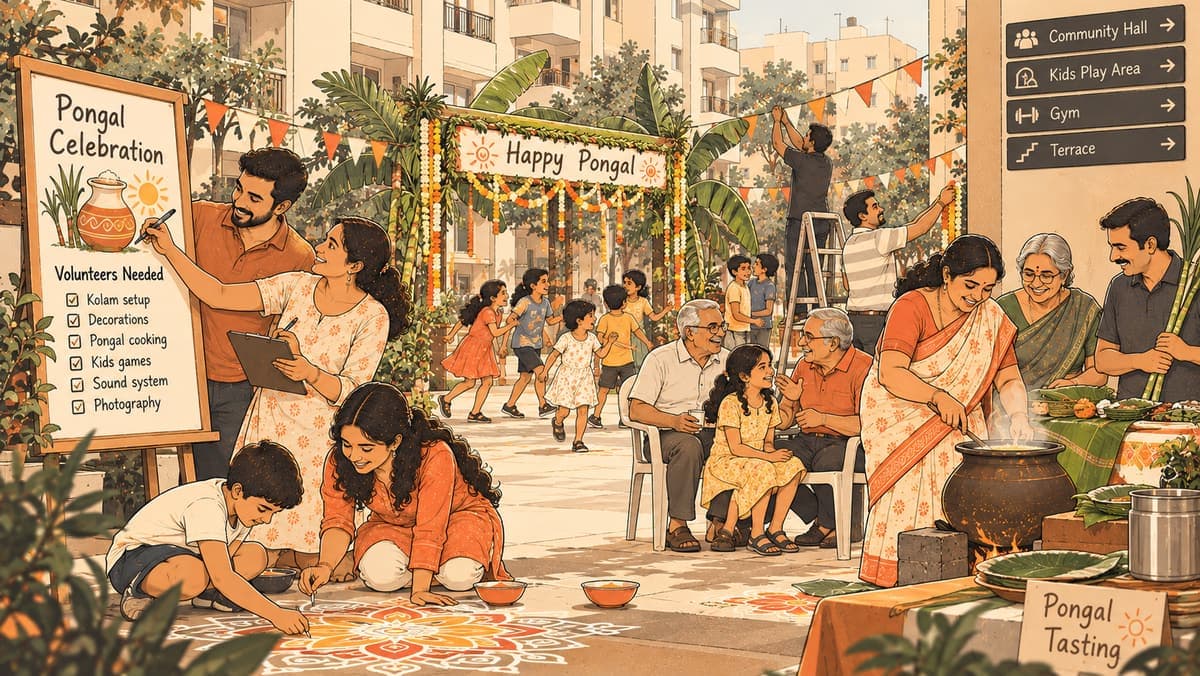
- Different backgrounds: for festivals, frame it as an open celebration and explain what will happen, so neighbours from other states or faiths feel welcome.
- Food needs: mark vegetarian, egg and non-vegetarian items clearly, and avoid nuts if children are coming.
Where Zinola fits
Zinola is a free neighbourhood app for Chennai, and several of these steps are built into it.
- Post the event. Anyone can host a public event for their area from the + menu with Plan an event. Choose a category such as Meetup, Kids, Sports, Festival or Volunteering, add the date and place, set an optional capacity and say who it is good for: kids, families, adults or seniors.
- Reach neighbours beyond your building. Public events appear in What's on for people nearby and on the events page.
- Get a headcount. Neighbours reply Going, Maybe or Can't go, so you know roughly how much tea to make.
- Answer questions once. People can ask the host questions on the event, so you are not answering the same thing ten times.
- Remind automatically. Attendees can add it to their calendar, and Zinola reminds them when it is today and when it starts in about an hour.
- Plan inside your circle. In an apartment or neighbourhood circle, you can run a poll to pick the date, post a private circle event, and keep volunteers talking in a group chat. Setting one up is covered in starting a circle for your RWA or apartment.
Zinola shows an event as free or paid only as information. It does not sell entry or handle money, so contributions stay between you and your neighbours.
Once your first event is done, read how to encourage participation in your residential community for keeping people involved after the first event.
Questions people ask
- How far in advance should I announce a neighbourhood event?
- About two weeks ahead works for most local events, with a reminder two days before and another on the morning itself.
- How do we fund a small apartment event?
- Borrow what you can, then use a small per-family contribution, a potluck or a few households sponsoring prizes. Write down every rupee and share the account afterwards.
- Can anyone post a public event on Zinola?
- Yes. Anyone can host a public event for their area using Plan an event from the + menu, and businesses can host events too. Private events can be posted inside a circle.
- Does Zinola collect event fees for organisers?
- No. Zinola shows whether an event is free or paid as information only and takes no payment, so any contribution is collected directly by the organisers.
Ready to plan yours?
Post your event on Zinola, get Going and Maybe replies from neighbours, and let reminders bring people on the day.
Plan an event