- Start with information everyone needs, like water and power timings, garbage days and important numbers.
- Give each topic its own small group, and treat the first 90 days as a plan from joining to meeting in person.
- Welcome new families quickly, rotate small jobs and close the loop so the same two people do not burn out.
Most apartment blocks in Chennai are full of people and strangely quiet. Forty homes, maybe a hundred and twenty residents, and yet the only time everyone talks is when the lift stops working or the sump runs dry. People nod in the parking area, wave at the gate, and go back inside.
That quiet is not because people don't care. It is usually because nobody has given them an easy, low-risk way to take part. A new family on the third floor doesn't know who to ask about the garbage timings. A retired uncle on the ground floor would happily keep an eye on the plants, but nobody asked. The kids already know each other from the play area, but their parents don't.
An active apartment community is built on purpose, in small steps, over a few months. Here is a practical plan that works whether you are a formal residents' welfare association with a registered committee or just a few neighbours who want the building to feel friendlier.
Start with what every resident already needs
Don't open with a meeting. Open with something useful. The fastest way to get people paying attention is to share information that affects their day:
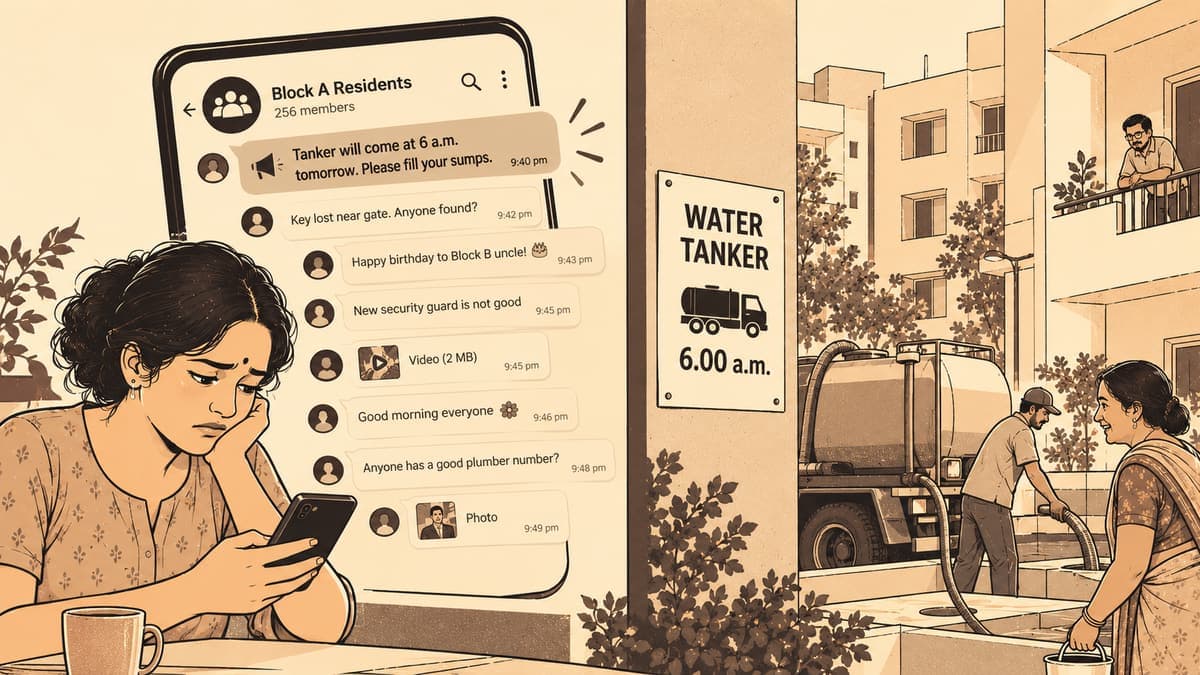
- Power and water cut timings. When TANGEDCO announces a shutdown in your area, or the tanker is coming late, a clear notice saves forty households forty phone calls.
- Garbage and recycling days. New residents almost never know these.
- Important numbers. The lift company's service line, the plumber the association uses, the nearest pharmacy that is open late, the watchman's shift times.
Once residents learn that the community space is where reliable information shows up, they start checking it. That habit is the foundation for everything else. A noisy channel full of forwards teaches people to mute it; a calm, useful one teaches them to look.
Give people small rooms, not one big hall
One group for everything means a question about a leaking terrace gets buried under birthday wishes and a debate about parking. People who only care about one topic leave, or stop reading.
Instead, split conversations by topic. A typical apartment might need:
| Group | Who it's for |
|---|---|
| General | Everyone, light chat and greetings |
| Maintenance | Leaks, lifts, generator, common-area repairs |
| Parking | Visitor cars, two-wheeler space, blocked gates |
| Kids & parents | Play dates, school-bus timings, tuition tips |
| Pets | Walk timings, vet suggestions, lost pets |
| Lost & found | That one slipper, the cricket ball, a set of keys |
The point is that each resident joins what matters to them and can mute the rest. The pet owner in C-block doesn't need every generator update, and the committee member handling the generator doesn't need every dog photo.
Plan your first 90 days
Building an active community is easier when you treat it like a short project. A rough plan for a committee or a few volunteers:
Month one: get everyone in
- Make a simple list of door numbers and tick off homes as they join.
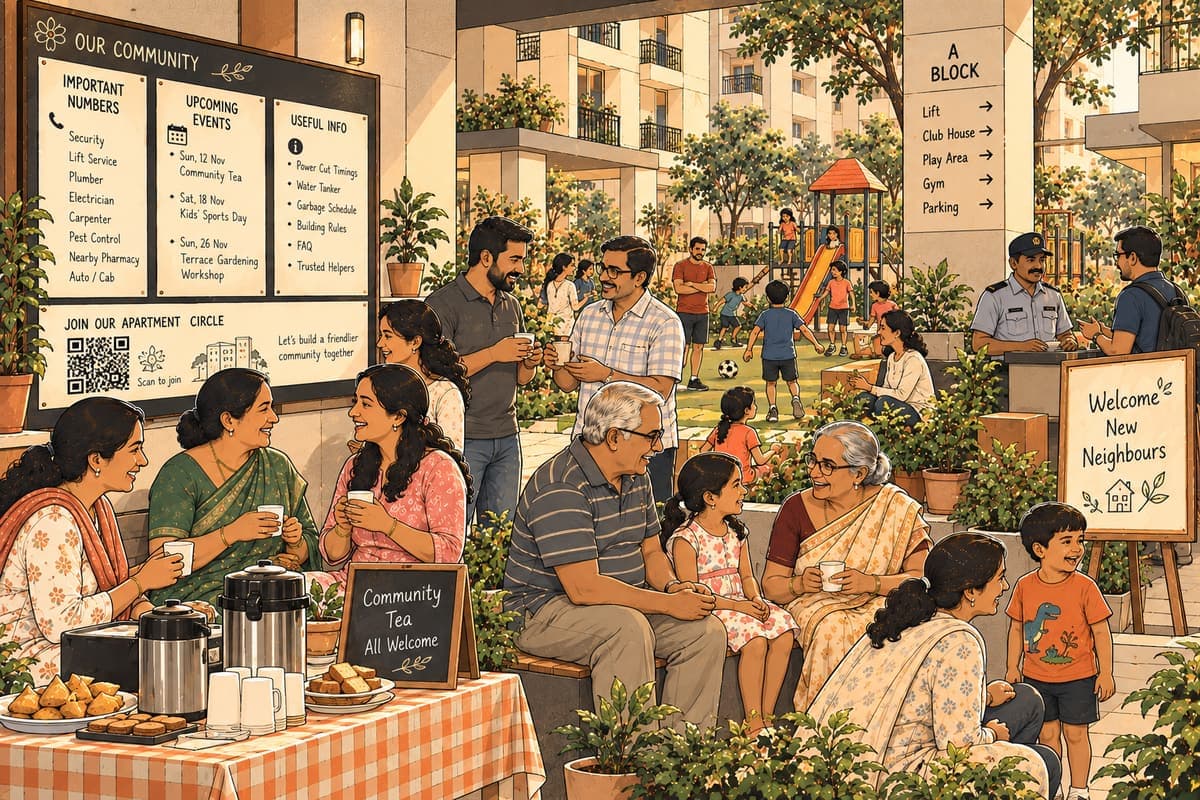
- Put a QR code on the notice board near the lift and at the security cabin.
- Knock on doors for the elderly residents and help them set up. Many will join only if someone sits with them for five minutes.
Month two: make it useful
- Post power-cut and water-tanker timings every time they change.
- Start a short list of helpers residents already use and trust: the maid who works in four flats, the electrician who fixed the B-block wiring.
- Run one simple poll on a low-stakes question, such as whether to keep the gym open until 10 pm.
Month three: meet in person
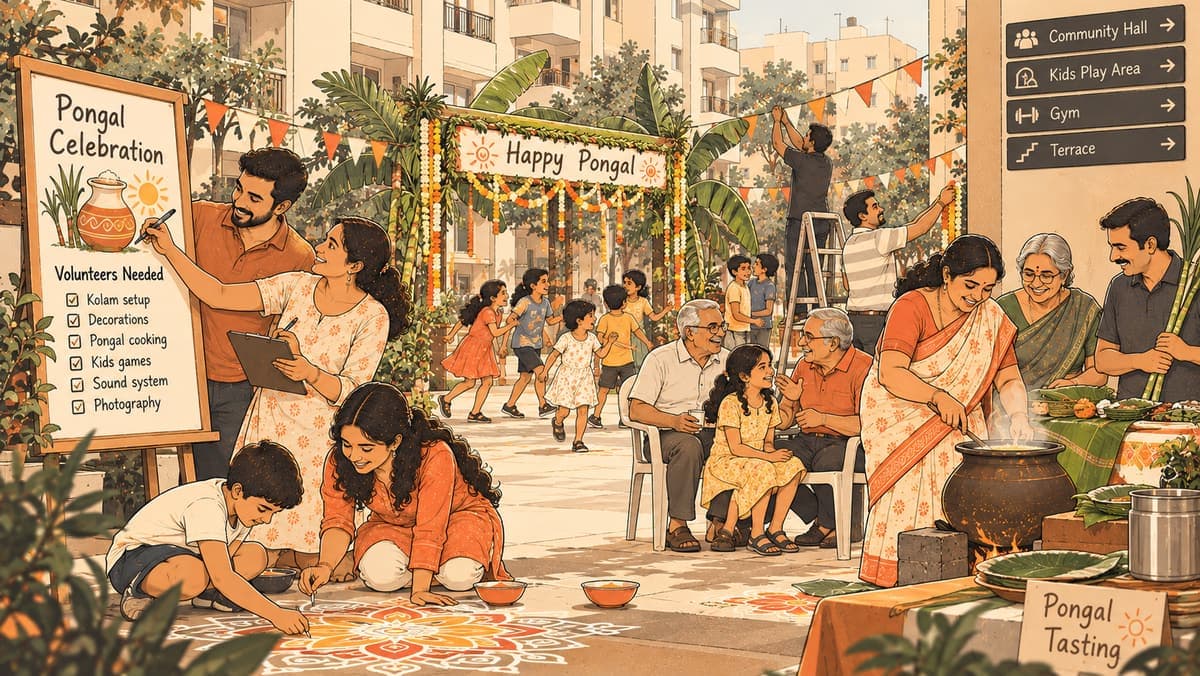
- Plan one small event. A Sunday morning tea in the lobby, a terrace cricket match, a kolam contest before Pongal.
- Keep it short and free. The goal is faces, not a grand function.
By the end of three months, most homes will be connected, they'll trust the information they see, and they'll have met at least a few neighbours face to face.
Welcome every new family properly
Chennai apartments see a lot of movement: IT families on OMR shifting for a new job, tenants arriving in June before schools reopen, owners returning from abroad. The first two weeks decide whether a new resident becomes part of the community or stays a stranger.
A simple welcome routine helps:
- Someone from the committee or the floor says hello in person.
- They get the invite link and are added to General plus the groups they want.
- They are pointed to the building rules, the important numbers and the helper list.
- Their kids are introduced to the play-area crowd, if they have kids.
Tenants in particular are often left out because the association thinks of itself as an owners' body. But tenants use the lift, the water and the parking every day. Including them in day-to-day conversation, even if voting on money matters stays with owners, makes the whole building run more smoothly.
Where Zinola fits
Zinola is a free neighbourhood app for Chennai, and its circles are built for exactly this kind of building. When you create a circle, you can choose the Apartment or residents' association kind. Inside it:
- Everyone is in General, and you can add up to 20 more groups, such as Maintenance, Parking, Kids & parents, Pets and Lost & found. Each group can be open, private (ask to join) or admin-only posting.
- An optional Announcements group lets only admins post, so official notices don't get lost in chatter.
- Alerts & timings holds power and water cuts, tanker, garbage and milk timings in one place.
- Important numbers, FAQ and Tips sit on the circle's board instead of disappearing in chat.
- Trusted helpers lets residents list maids, plumbers and others and vouch with "I use them too". Numbers are visible to members only. These helpers are vouched for by neighbours, not screened or vetted by Zinola, so residents should still do their own checks.
- Polls in Apartment circles count one vote per home, using door numbers. Events show who is going, who might come and how many.
- Joining works through invite links and QR codes (links can be limited or set to expire), personal invites or a request to join with optional questions.
If you are setting one up, our step-by-step guide on starting a circle for RWAs and apartments walks through it.
Keep the energy going
Communities fade when the same two people do everything. A few habits keep things alive:
- Rotate small jobs. One resident handles the Pongal plan this year, another handles the Independence Day flag hoisting.
- Thank people publicly. When someone finds a good carpenter or fixes the terrace light, say so in General.
- Close the loop. If residents raise an issue, tell them what happened, even if the answer is "the lift company comes Thursday".
- Write the rules down once. Pet timings, visitor parking, noise after 10 pm. Clear rules prevent repeat arguments.
For more ideas on getting quieter residents to take part, read how to encourage more participation in your residential community. If your building's main problem is a chat group where nothing can be found, this piece on messages getting lost in apartment WhatsApp groups is worth a look.
An active apartment community doesn't need a big budget or a clubhouse. It needs useful information, small rooms for different topics, a warm welcome for newcomers and a few people willing to start. The rest grows from there.
Questions people ask
- How do you start building an apartment community from scratch?
- Start with information every resident needs, such as power and water cut timings, garbage days and important numbers. Once people trust the space for useful updates, add topic groups and plan one small in-person event.
- Should tenants be part of the apartment community?
- Yes. Tenants use the lift, water and parking every day, so including them in day-to-day conversation helps the building run smoothly, even if votes on money matters stay with owners under your bylaws.
- Is Zinola free for apartment associations?
- Yes. Zinola is free for residents, and creating an Apartment or residents' association circle costs nothing. There are no paid plans or ads.
- Does Zinola vet the helpers listed in a circle?
- No. Trusted helpers are vouched for by members who tap "I use them too", and their numbers are visible to members only. Zinola does not screen them, so residents should do their own checks before hiring.
Start your building's circle
Set up a free Apartment circle on Zinola with groups, alerts, polls and a helpers list for your residents.
Read the guide