
- Walk your area early morning, late afternoon and after dark in week one to see how it changes.
- Learn the local landmarks people use for directions, and say hello in small, repeated ways.
- By week four, look beyond your building for people who share your interests, from runners to readers.
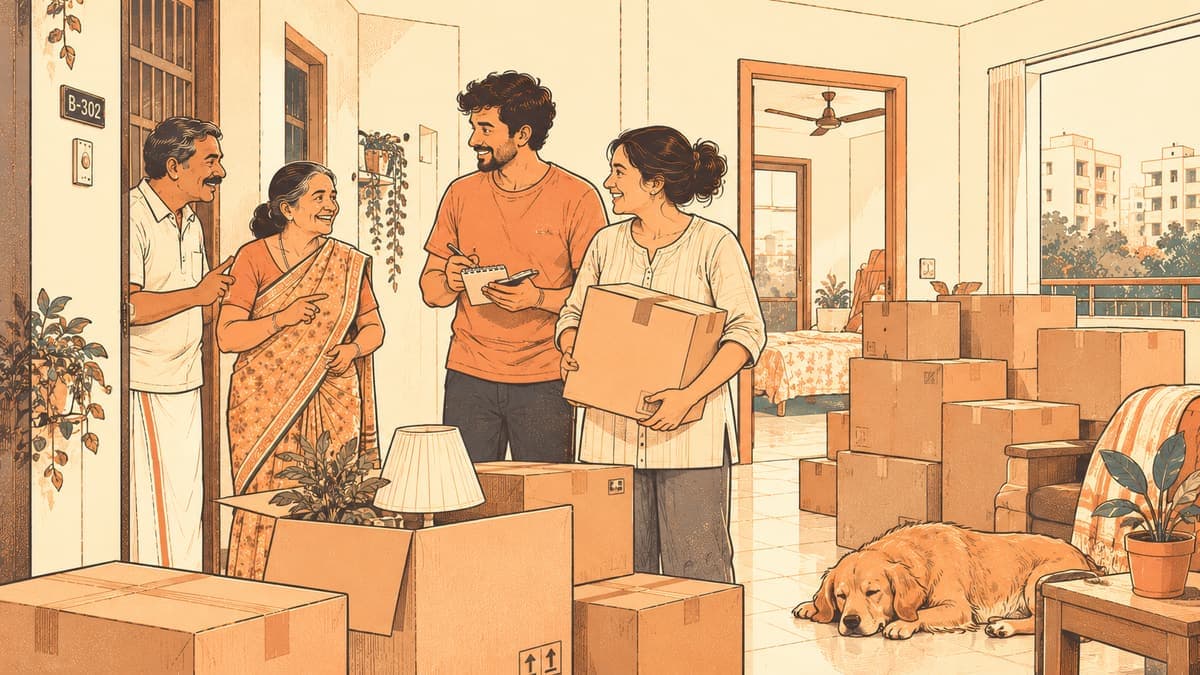
The first month in a new city is strange. You know the address of your flat and the route to work, but the area in between is a blur of shop signs, honking and lanes that all look the same. In a big Indian city that blur can last a long time. People are friendly, but they are also busy, and nobody is going to knock and hand you a list of where things are.
The good news is that a neighbourhood opens up quickly once you go looking. Four weeks is enough to know your streets, recognise a few faces and stop feeling like a visitor. It just helps to have a plan, because "I'll figure it out as I go" usually turns into six months of ordering everything online and knowing nobody.
Here is a week-by-week way to get to know your neighbourhood in your first month, whether you have landed in Salt Lake in Kolkata, Gomti Nagar in Lucknow, Navrangpura in Ahmedabad or Kakkanad in Kochi.
Week one: walk it, at different times
Before any app or group, use your feet. Walk your area at three different times: early morning, late afternoon and after dark. Each one shows you a different place.
- Early morning (6 to 7): you will see who walks, where the milk and flower vendors stand, which tea shop opens first, and whether there is a park or temple tank people gather around.
- Late afternoon (4 to 6): school traffic, the evening snack stalls, which roads jam and which stay quiet.
- After dark: which streets are well lit, where you would feel comfortable walking home, which shops stay open late.
Keep a note on your phone. Mark the nearest pharmacy, the provision store, an ATM that usually has cash and a place to get keys cut. It sounds basic, but these are the things you will urgently need on a Sunday night.
Week two: learn how people talk about the area
Every neighbourhood has its own internal map. In Malviya Nagar, Jaipur, people give directions by temple and market. In Sector 62, Noida, it is the metro station and the big office towers. In Anna Nagar, Chennai, the arch, the tower park and the numbered blocks. If you learn the landmarks locals use, directions and recommendations suddenly start making sense.
This is also the week to listen. Read what your neighbours are discussing: water supply, a road being dug up, a new bakery, a dog that needs a home. You will learn more about the real character of an area from a week of local chatter than from any property listing. Our piece on rediscovering your neighbourhood has more ideas for noticing the place around you.
Week three: say hello in small, low-pressure ways
You don't need to throw a house-warming party for twenty strangers. Small, repeated contact works better.
- Go to the same shops. The provision store uncle who sees you four times a week will start keeping your usual brand aside.
- Talk to your building's watchman or caretaker. They know who is who, when the tanker comes and which plumber the building calls.
- Ask a question. "Where do you get your vegetables?" is an easy opener with the person next door. People like being asked.
- Join one regular thing. A morning walking group, a yoga session in the park, a weekend cricket game on a quiet street. Showing up twice matters more than showing up once.
Week four: find your people beyond your building
By now you know your street. The next step is finding people who share something with you beyond the address. That could be runners at the lake in Whitefield, Bengaluru, a book club, other parents at the same school, or people from your office who live nearby.
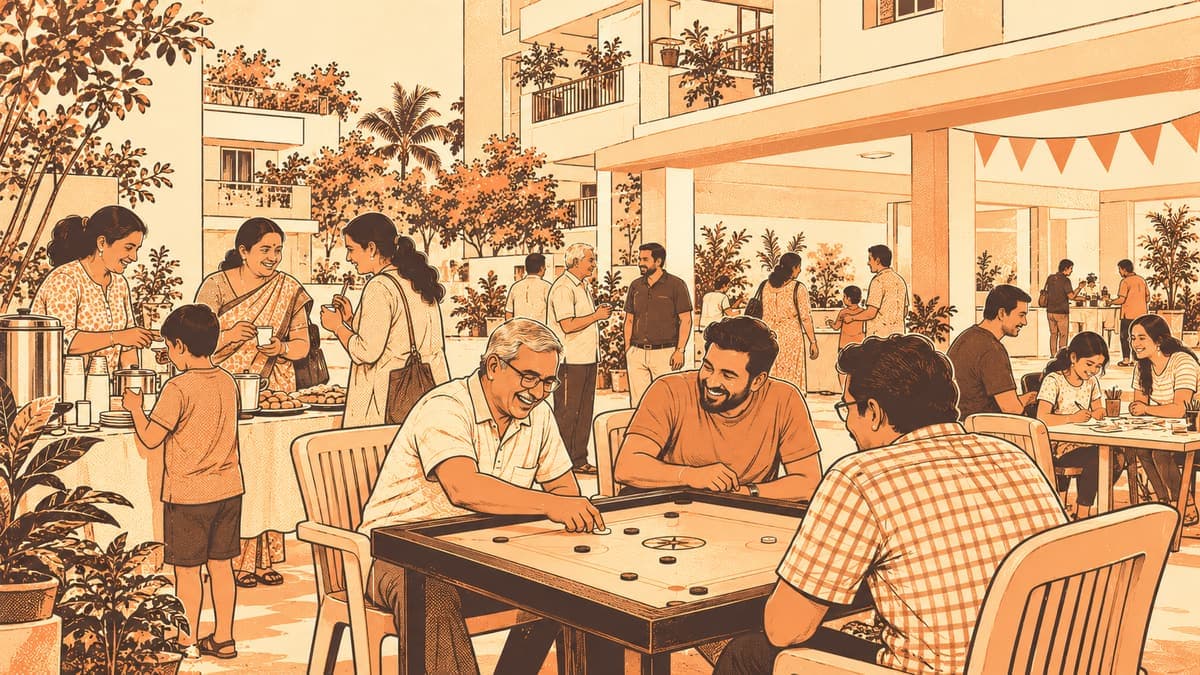
Look out for local events: a classical music evening, a Holi or Lohri get-together, a volunteering drive after heavy rain, a weekend workshop. One event where you talk to two people is worth more than ten you scroll past. If you are new to the city and feeling a bit alone, this piece on building a local circle is worth reading.
Where Zinola fits
Zinola is a free neighbourhood app and website, on Android, iPhone and the web. It is built for exactly this first-month problem.
- Pick your area once, or tap "Find my neighbourhood". The Home screen then shows two things: "Neighbourhood", with posts from people around you, and "What's on", with events nearby.
- Ask without knowing anyone. The + menu has "Ask a question" and "Recommend someone". Answers that neighbours agree with rise to the top, and you can mark the one that sorted it.
- Join circles. Your apartment or residents' association may already have one, and there are neighbourhood circles and interest clubs too. Open circles can be read by anyone, so you can look around before joining. Inside, the board often has Alerts & timings and Important numbers that save a newcomer a lot of asking.
- Find local businesses in the businesses directory, with reviews that break down Quality, On time, Price and more, so you can see how people in your area rate a tailor or a repair shop.
- Go to something. The events page lists meetups, workshops, sports, kids' activities, festivals and volunteering near you, with Going, Maybe and reminders.
A friendly helper character explains each screen the first time, which helps when everything is new. There are no ads and nobody pays to rank.
A simple first-month checklist
| By the end of | You should know |
|---|---|
| Week 1 | Your nearest pharmacy, provision store, ATM and an auto stand |
| Week 2 | The landmarks locals use, and the main local issues |
| Week 3 | Your watchman's name, two shopkeepers and one neighbour |
| Week 4 | One regular group or event you go to |
If you are still in the middle of unpacking, start with the practical side: our first-week moving checklist covers power, water, milk and garbage timings. The rest of the moving and settling in series covers students, families and what to ask before you sign for a flat.
Questions people ask
- How long does it take to feel settled in a new Chennai neighbourhood?
- With a little effort, a month is enough to know your streets, a few shopkeepers and one or two neighbours. Regular routines matter more than big gestures.
- How can I find events near me in Chennai?
- Zinola's Home screen has a "What's on" part, and the events page lists meetups, workshops, sports, kids' activities, festivals and volunteering near you.
- Can I ask neighbours a question if I don't know anyone yet?
- Yes. On Zinola, tap + and choose "Ask a question". People around you can answer, and the answers neighbours agree with rise to the top.
- Is Zinola free?
- Yes. Zinola is free for residents and businesses, with no ads and no paid ranking.
See what's around you
Pick your area once and see posts from neighbours and events nearby.
Explore events