
- Sort power, water and the meter room in the first two days, since they can ruin the whole week.
- Learn the building's rhythm for milk, garbage, newspapers and gate timings early on.
- Find helpers your neighbours trust, and note a nearby doctor and pharmacy before you need them.
The lorry has left, the boxes are stacked in the hall, and the fan in the bedroom makes a noise you will be hearing for the next two years. Moving house anywhere in India is tiring enough. What makes the first week harder is everything nobody tells you: when the water comes, when the power usually goes, who takes the garbage and at what time, and which neighbour knows a good electrician.
This checklist is about the neighbourhood side of moving, not the packing side. These are the things to sort out in your first seven days so that the second week feels like home instead of a camp. Tick them off in any order, but try to get the first three done before the weekend.
Day 1–2: power, water and the meter room
These are the two things that will ruin your week if you get them wrong.
Power
- Find the meter room and note your service connection number. You will need it to pay the bill and to report a fault.
- Check whether the building has a generator or inverter backup and which points it covers. Many flats have backup only for lights and fans, not the geyser or AC.
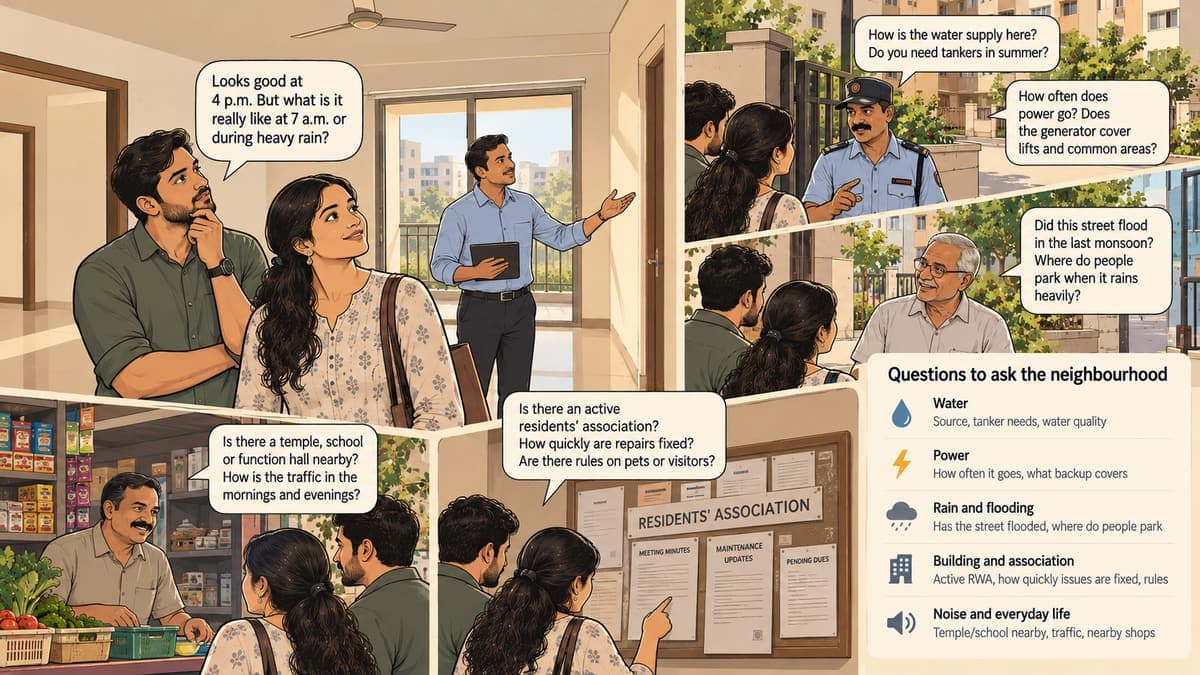
- Ask a neighbour when power cuts usually happen in your area, and whether the building gets a heads-up.
Water
- Ask whether the building gets corporation supply, borewell, tanker water or a mix, and on which days.
- Find out how the sump and overhead tank are managed, who switches the motor on, and whether there is a fixed time.
- If you buy drinking water in cans, get the vendor's number from the watchman.
In the monsoon, add one more question: does this street flood, and where do people move their two-wheelers when it does?
Day 2–3: milk, garbage and the daily rhythm
Every building has a rhythm, and fitting into it early avoids small daily irritations.
- Milk: most buildings have a milkman who leaves packets at the door or in a bag on the gate. Ask the price, the time and how payment works, monthly or daily.
- Garbage: find out the pick-up time, whether wet and dry waste are collected separately, and where the bins are. Leaving a bag out at the wrong time is the fastest way to annoy the whole floor.
- Newspaper, flowers, ironing: the local istriwala and the newspaper agent will likely find you. Ask the neighbours what they pay so you know the going rate.
- Gate timings: some buildings close the main gate at night. Know when, and how to get in late.
Day 3–5: helpers you can trust
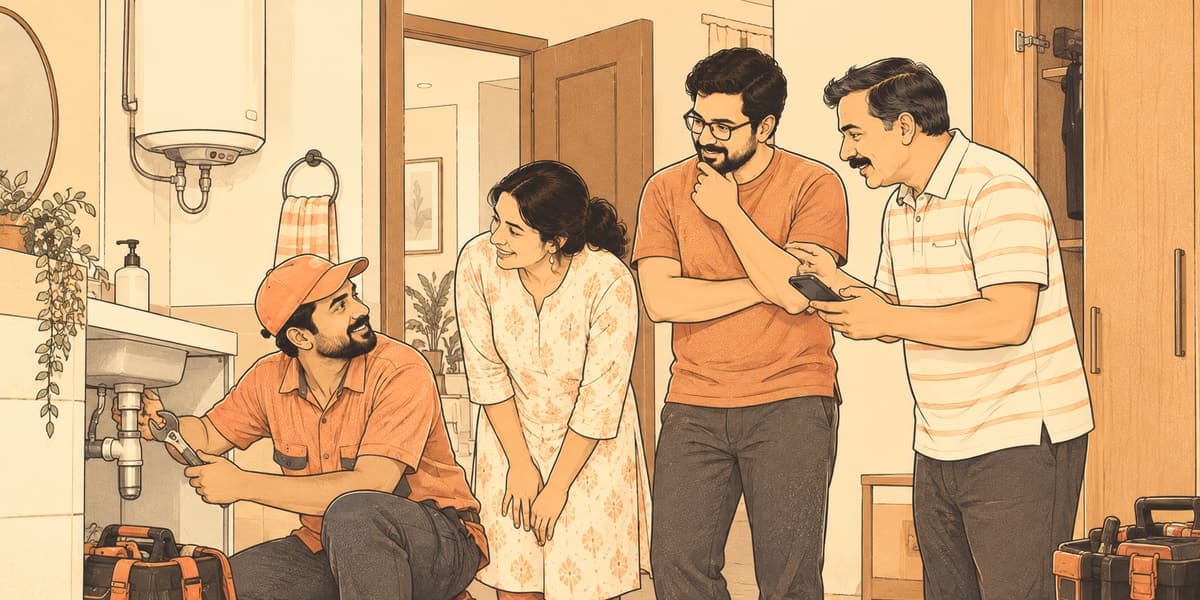
You will probably need someone for cleaning, cooking or both, and perhaps a plumber and electrician for small fixes left by the previous tenant.
The best source is always the people already living in your building. Ask two or three neighbours, not just one, and listen for names that come up more than once. When you meet a helper, have a short conversation: which other homes they work in, their timings, their days off, and what they charge. Call one of those other homes if you can.
For repairs, a quick read of our guides on finding a reliable plumber and checking an electrician before you hire will save you from the classic "it's a small job, madam" that turns into a full day.
Day 5–7: doctors, pharmacy and important numbers
Nobody wants to look for a doctor while running a fever. Do it now.
- Ask neighbours which general physician, paediatrician or clinic they go to, and which is open on Sundays or late evenings.
- Find the nearest pharmacy that stays open late and save the number.
- Note the nearest hospital with an emergency department and how long it takes to get there at peak traffic.
- Make one note on your phone called "Building" with the secretary, watchman, building electrician, plumber, lift company and water vendor.
Neighbours' experience is the right starting point, but always make your own decision about any doctor or clinic.
Where Zinola fits
Most of this checklist is about finding out what your neighbours already know. Zinola, a free neighbourhood app, keeps that knowledge in one place.
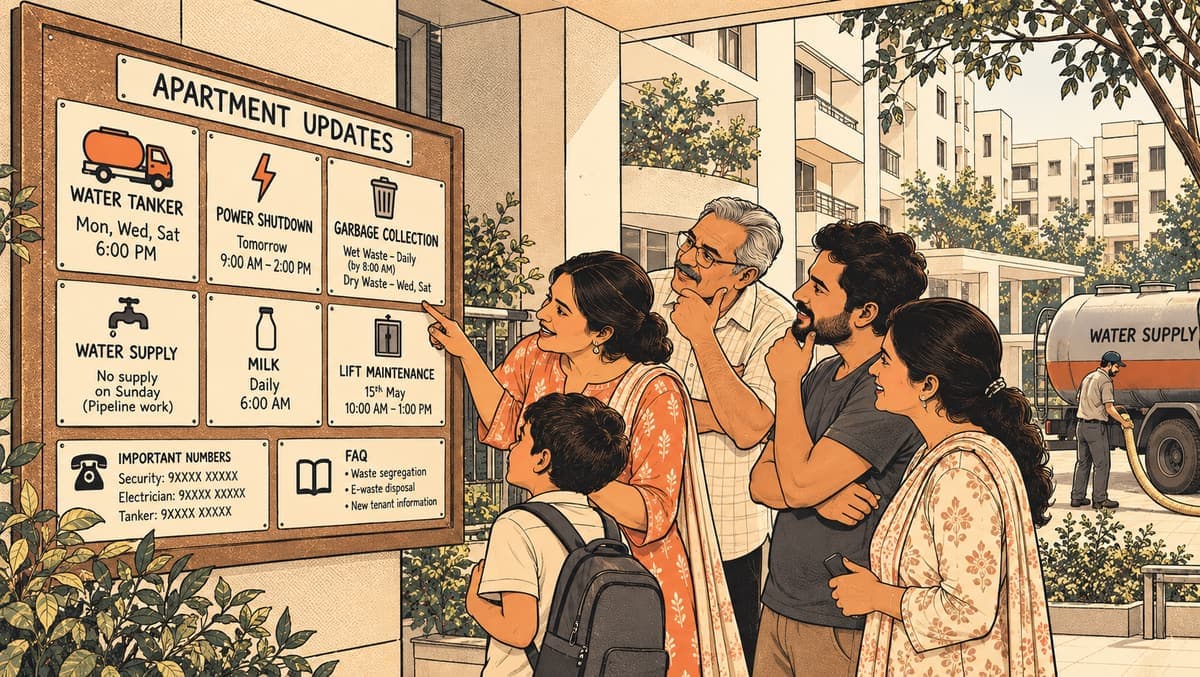
- Your building's circle. If your apartment or residents' association has a circle on Zinola, ask the secretary for an invite link or QR code. On the board you may find Alerts & timings for power and water cuts, tanker, garbage and milk, plus Important numbers and an FAQ. That alone covers half of the list above.
- Trusted helpers. Circles can keep a list of maids, plumbers, electricians and others vouched for by members with "I use them too". Numbers are visible to members only. These are neighbours' recommendations, not checks done by Zinola, so still meet the person and ask around.
- Ask on Home. Tap + and choose "Ask a question" or "Need help", for example "Any GP near Dwarka open on Sunday?". Answers neighbours agree with rise to the top.
- Businesses nearby. The businesses directory includes categories like Repairs, Cleaning & maintenance, Moving and Health & clinics, with reviews from local people.
- Furnishing the flat. If you need a fridge, a cot or curtains, the Marketplace has pre-loved items from neighbours. You chat privately, numbers stay hidden, and you pay the seller directly.
If your building has no circle yet, you could be the one to start it. This guide for RWAs and apartments walks through it, and our post on water tanker, power cut and garbage timings shows how to set up the board.
Your one-page first-week checklist
| Task | Done? |
|---|---|
| Service connection number noted | |
| Backup power coverage checked | |
| Water source and motor timings known | |
| Milk arranged, price agreed | |
| Garbage pick-up time and segregation known | |
| Helper met and one reference called | |
| GP and late-night pharmacy saved | |
| "Building" contacts note made |
Once the practical side is sorted, turn to the people. Our guide to your first month in a new neighbourhood picks up where this list ends.
Questions people ask
- What should I sort out first after moving into a Chennai flat?
- Power and water: note your service connection number, check what the backup covers, and find out where the building's water comes from and when the motor runs.
- How do I find a trustworthy maid in a new area?
- Ask two or three neighbours and look for names that come up more than once. Meet the person and call another home they work in.
- Where can I find my building's water and power timings?
- Ask the watchman or secretary. If your building has a Zinola circle, its board may list Alerts & timings for power and water cuts, tanker, garbage and milk.
- Does Zinola check the trusted helpers in a circle?
- No. They are vouched for by circle members who use them. Zinola does not check them, so always meet the person and ask around.
Get your building on one page
Timings, important numbers and trusted helpers, kept in your apartment's circle.
Start a circle