- Big group chats rarely become friendships because there are too many people and nothing to do together.
- Climb a small ladder from name to neighbour, through reactions, helpful answers and shared activities.
- Simple rituals like a monsoon check-in, a swap shelf or welcoming new families make a street feel close.
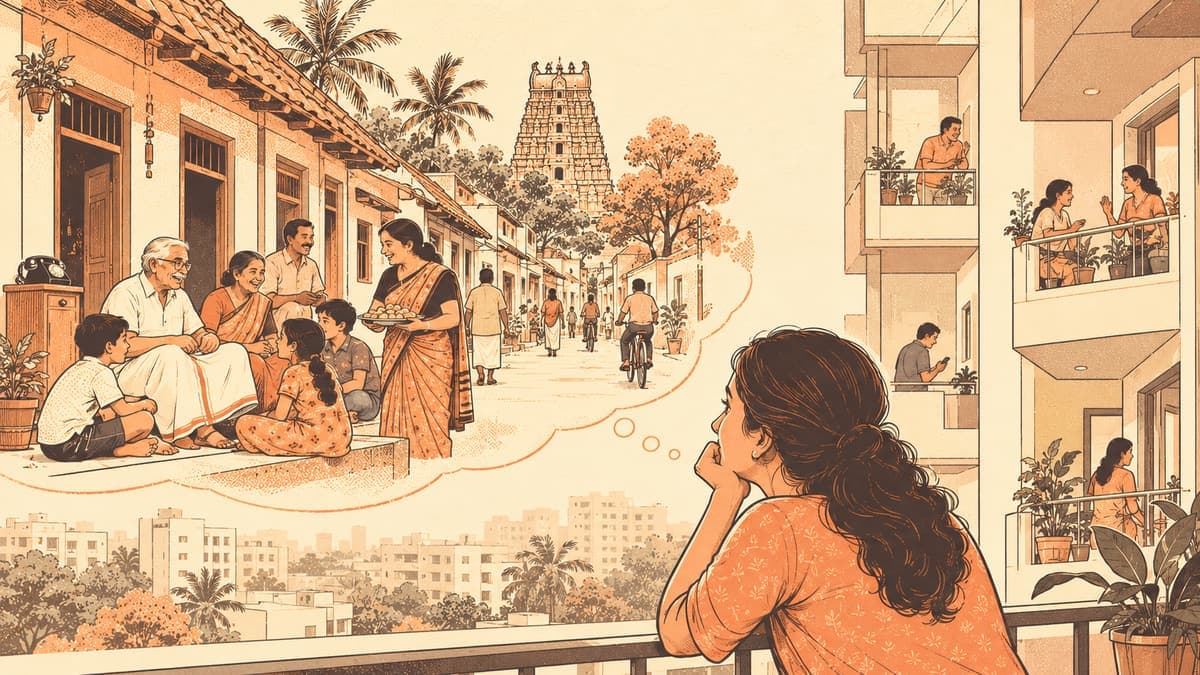
You might be in a group with two hundred people from your area and still not know a single one of them well enough to borrow a drill. You have seen their names for years. You know who sends the long devotional forwards and who always replies "noted". But if you passed them at the Perambur market on Saturday, neither of you would know.
That is the strange thing about group chats. They connect us all the time, yet they rarely turn into actual relationships. Not because people are unfriendly, but because a chat on its own does not give anyone an easy next step.
This piece is about those next steps: how a name in a chat becomes a neighbour you wave to, then someone you trust, and sometimes a friend. And how the tools you use can quietly help or hinder that.
Why chats rarely become friendships
Think about how friendships usually form. You see the same person again and again, in a setting where you can talk a little. You help each other with something small. Eventually you do something together.
A big group chat skips most of that.
- Too many people at once. It is hard to have a personal exchange in front of two hundred others, so most people stay silent.
- No faces, no places. You see a name and a number, not the person who walks a beagle past your gate every evening.
- Nothing to do together. Chats are for talking. Friendships often grow from doing.
- No small, safe gestures. Between "say nothing" and "send a message to everyone" there is very little in between.
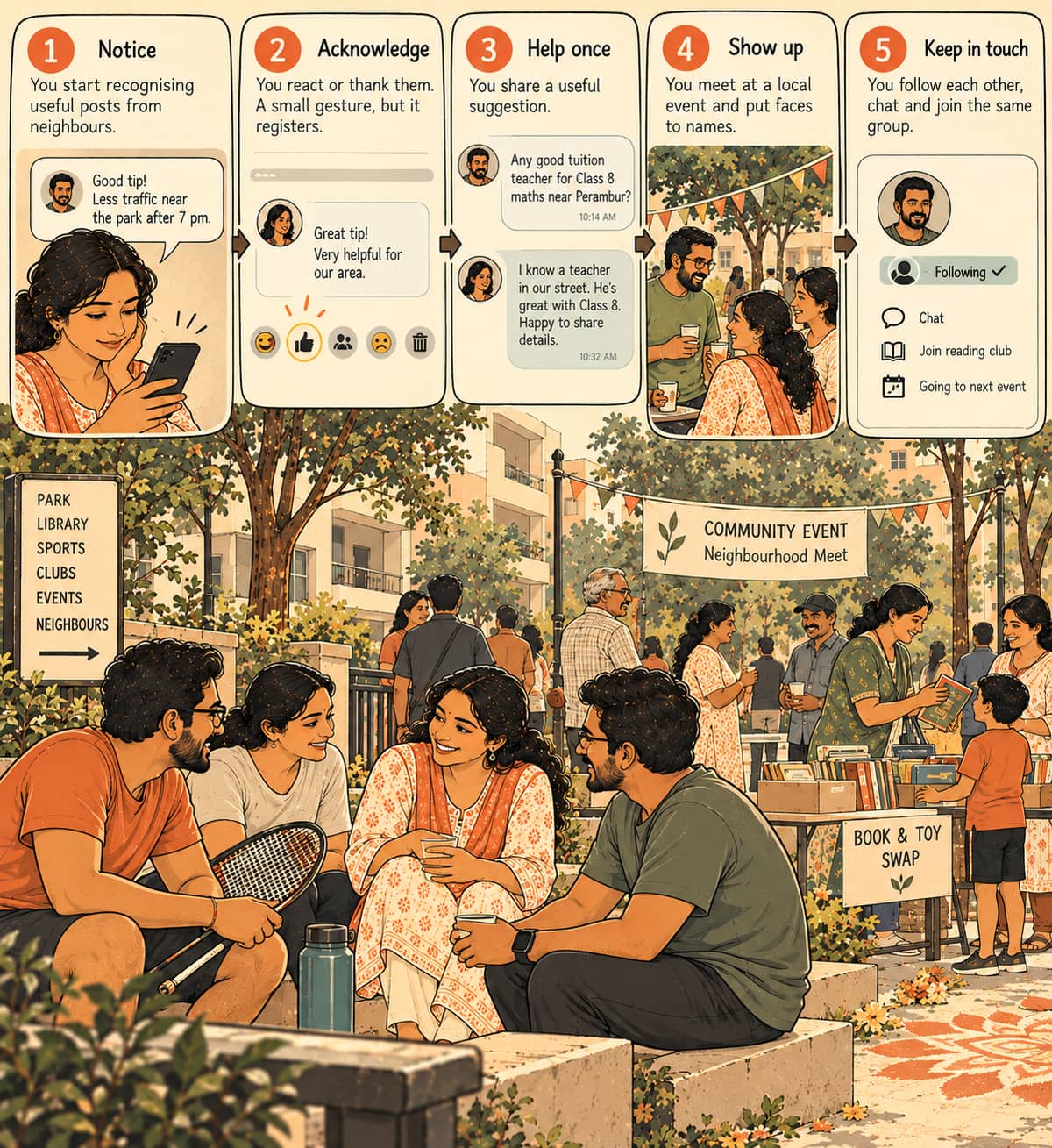
A five-step ladder from name to neighbour
Real connection usually climbs in small steps. Each one is low-risk and makes the next one easier.
- Notice. You start recognising a few names because they post useful things: a tip about the quietest time to visit the neighbourhood park, or a warning about waterlogging on the main road.
- Acknowledge. You react to their post, or thank them. A tiny gesture, but it registers.
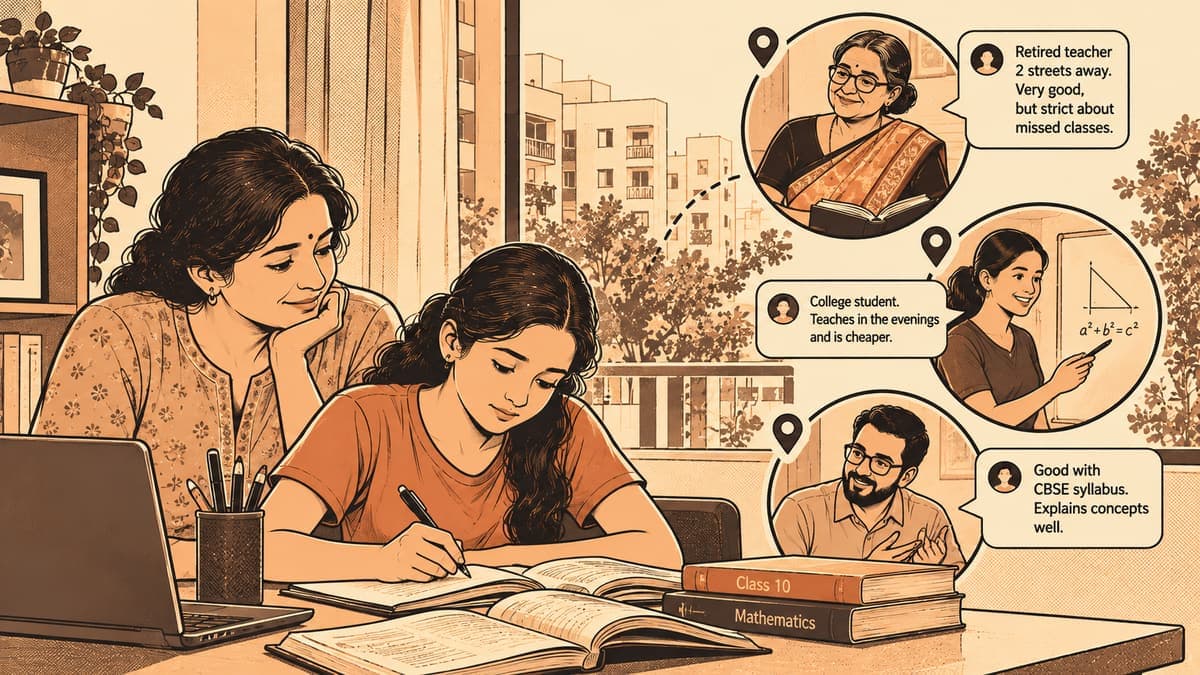
- Help once. They ask for a good tuition teacher for Class 8 maths, and you know one. You answer. Now there is a reason to remember each other.
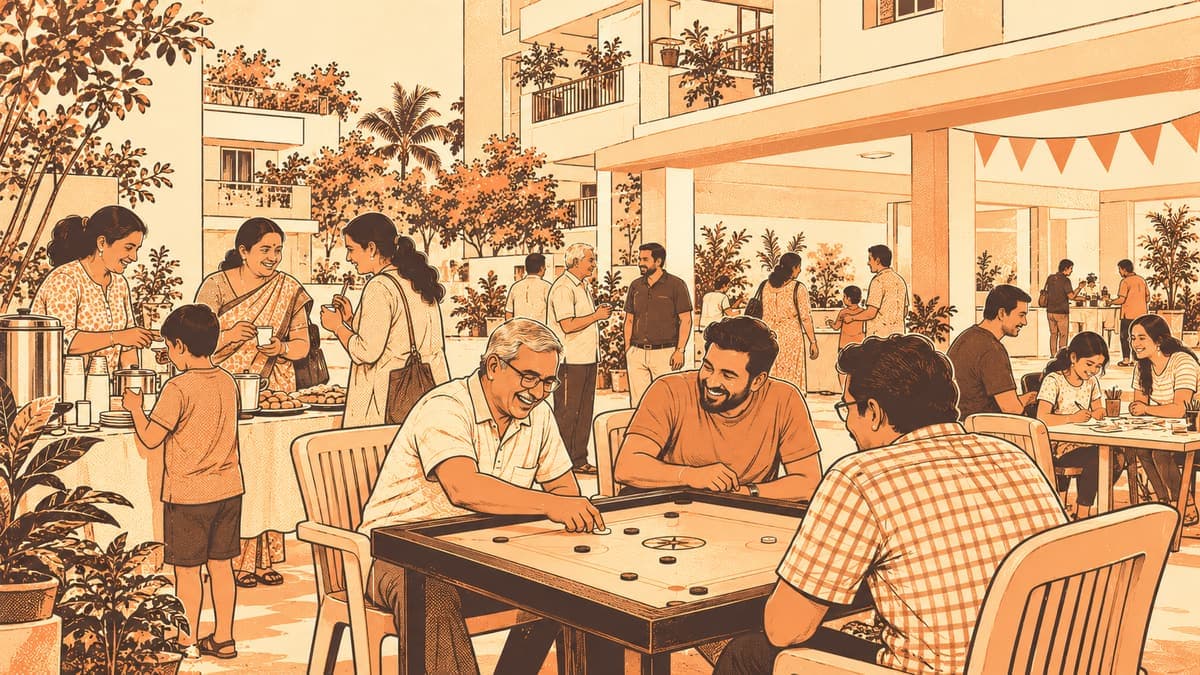
- Show up. There is a Sunday morning walk in the park, or a rangoli session on the street before Diwali. You go, and you finally put faces to names.
- Keep in touch. You follow each other, start a one-to-one chat, maybe join the same reading club.
Most neighbourhoods stall at step one. The trick is to make steps two to four easy and natural.
Where Zinola fits
Zinola is a free neighbourhood app for India, and much of it is built around exactly these small steps.
- Gestures that are not messages. Every post has six reactions: Helpful, Happy, Me too, Bad, Sad and Trash. Tapping "Helpful" or "Me too" is step two without adding noise.
- Helping in the open. On the Home feed, neighbours ask questions, ask for help and recommend people. Answers others agree with rise to the top, and the asker can mark the one that sorted it, so helpful neighbours become recognisable.
- Commendations, not ratings. You can commend a person as Helpful, Welcoming, Reliable or Kind. Zinola does not rate people, so this stays a warm gesture rather than a score.
- Things to do together. Anyone can plan a public event for their area, from a Holi get-together to a weekend cleanup. You can mark Going, Maybe or Can't go, ask the host a question and get a reminder. Browse what is on at events.
- Groups for what you love. Interest-club circles bring together riders, runners, readers and more, so you meet people for a reason beyond living nearby.
- Following and chatting, with consent. The people directory lets you find and follow neighbours. Private accounts approve followers, and one-to-one chats open only between people who follow each other, so nobody gets cornered by a stranger.
Small rituals that make a street feel close
Tools help, but rituals do the real work. A few ideas that suit the Indian calendar:
- A monsoon check-in. When the rains come, post asking if any older residents need help with groceries or medicines. It is often how a street discovers its kindest people.
- A festival morning. Before Diwali, Onam or Pongal, invite the street to draw rangoli together early one morning, then share chai.
- A swap shelf. Once a month, families bring books and toys their children have outgrown.
- A welcome for new families. When someone moves in, a single "welcome, here's who to call for the water can" goes a long way.
- Celebrate local help. When the electrician who came during the power cut did a great job, recommend him publicly so the next family finds him.
None of these needs a committee or a budget. One person, one post, one morning is enough to start.
Start with one step this week
You do not have to become the neighbourhood organiser. Just pick one rung of the ladder:
- React "Helpful" to three useful posts from people near you.
- Answer one question you genuinely know the answer to.
- Mark "Going" on one local event and actually go.
If you are curious why events matter so much for this, read how local events turn neighbours into friends. And for the deeper question of why we know so few people living so close, see why we live so close yet know so few of our neighbours.
Questions people ask
- Can I message any neighbour on Zinola?
- One-to-one chats open only between people who follow each other, and private accounts approve their followers. Group chats happen inside circles you have joined.
- Does Zinola let you rate people?
- No. There are no ratings of people. You can give commendations instead: Helpful, Welcoming, Reliable or Kind.
- How do I find local meetups and events?
- The "What's on" part of Home shows events nearby, and anyone can plan a public event for their area. You can mark Going, Maybe or Can't go and get reminders.
- Are there groups for hobbies, not just apartments?
- Yes. Interest-club circles bring together people like riders, runners and readers, alongside apartment, neighbourhood, school and workplace circles.
Meet the people around you
See who is nearby, follow neighbours who post helpful things, and find something happening in your area this weekend.
Find your neighbours