
- A meetup happens when one person owns it with a specific proposal and a deadline to decide.
- Meet people from a chat in public places in daylight, tell someone and arrange your own transport.
- Greet newcomers well on the day, then fix a regular slot and rotate the organiser to keep going.
Say you are part of a photography chat for people around Kondapur, Hyderabad. For six months, it has been lively. People share shots of old temples and markets, debate lenses, post sunset photos from the lake. Everyone is friendly. And yet, nobody has ever met.
Every few weeks someone says, "We should do a photo walk sometime!" Ten people reply with a thumbs up. Then the conversation moves on, and the walk never happens.
This is the most common gap in any interest group: plenty of talk, no meeting. The good news is that it is easy to close, once someone takes three or four small, concrete steps. This article is a practical checklist for turning online conversations into a real-life meetup, and for making that first meeting feel safe and welcoming.
Why "sometime" never happens
A meetup rarely fails because people are not interested. It fails because nobody owns it. "We should meet" has no date, no place and no person in charge, so it stays a nice idea.
Three things turn an idea into a plan:
- One person who says "I'll organise it". Just one. Committees slow things down.
- A specific proposal. "Photo walk, Viman Nagar, Sunday 6 a.m., meet at the park gate" gets far more replies than "what do you all think?"
- A deadline to decide. "Let's lock it by Thursday night" stops the discussion from dragging.
Planning the first meetup: a checklist
Keep the first meetup small, short and easy. You are not trying to impress anyone; you are trying to get people in the same place once.
| Decision | Good first-meetup choice | Why |
|---|---|---|
| Format | Something with an activity: a walk, a ride, a book chat | Gives people something to do besides small talk |
| Length | 60 to 90 minutes | Easy to commit to |
| Time | Early morning or late afternoon on a weekend | Avoids office hours and the worst heat |
| Place | A public, well-known spot | Easy to find, comfortable for first-timers |
| Cost | Free, or just your own tea and snacks | Nobody should hesitate over money |
| Size | 5 to 15 people | Big enough to be lively, small enough to talk |
Then share the essentials clearly: date, start time, exact meeting point, what to bring, roughly when it will end and a backup for rain.
Meeting people from a chat, safely
Most people in a local interest group are exactly who they seem to be. Still, meeting people you only know from a chat deserves some common sense, especially for women, older members and anyone coming alone.
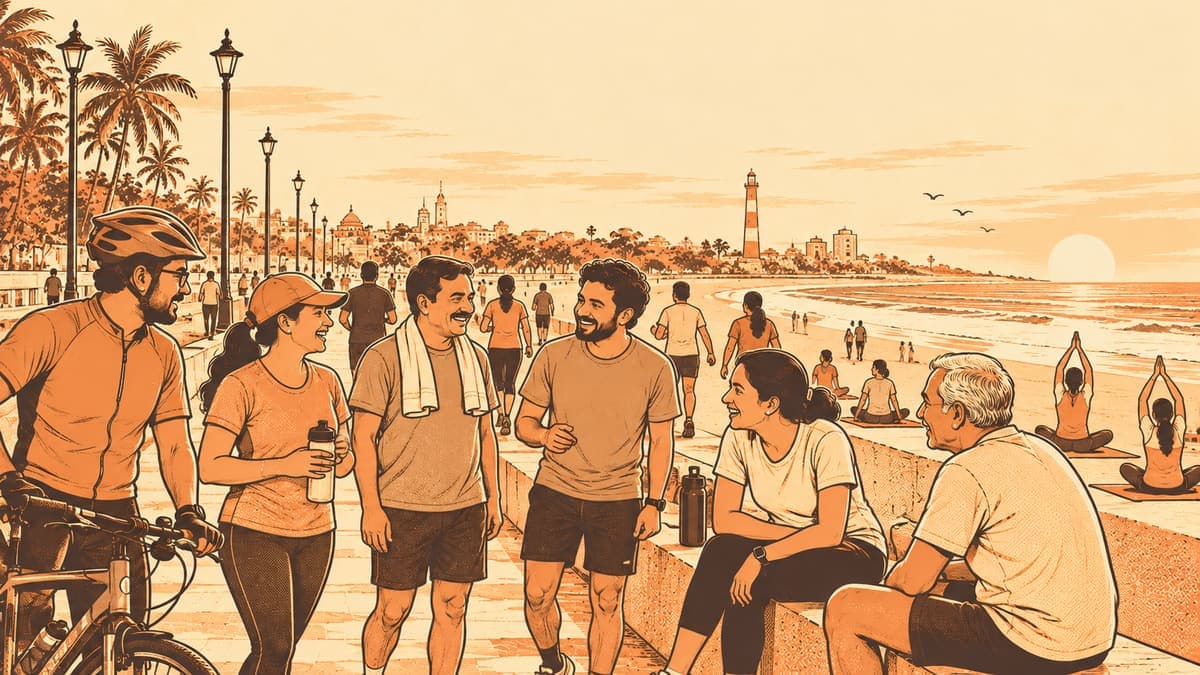
- Meet in public places with other people around, like a beach promenade, a park, a café or a temple tank, not someone's home for the first time.
- Prefer daylight hours for first meetings.
- Tell a family member or friend where you are going and when you expect to be back.
- Arrange your own transport so you can leave whenever you like.
- Do not share personal details like your home address or financial information until you know people well.
- Trust your instinct. If something feels off, it is fine to leave early or skip.
Organisers can help by saying clearly in the plan: "Public place, all welcome, come with a friend if you like."
Making newcomers feel at home on the day
The first ten minutes decide whether a newcomer comes back.
- Arrive early and be visible. A small sign or a clear description ("I'll be in a blue cap near the entrance") helps.
- Do quick introductions. Name, area, and one line about their interest. Keep it light.
- Pair new people with a regular for the walk or ride.
- Avoid in-jokes and long technical debates. Save the lens arguments for later.
- Close with a clear next step. "Same time next month?" or "Let's do the lakeside next."
After the meetup, post a short thank-you in the chat and a few photos if people are happy to be in them. This is the moment the group turns from "people in a chat" to "people who know each other".
Where Zinola fits
Zinola is a free neighbourhood app, and it is designed for this shift from chat to meeting in person.
If your group is ongoing, you can start a circle of the "Interest club" kind. The group chats live inside the circle, so the conversation and the meetups are in one place. When it is time to meet, create a circle event: members tap Going, Maybe or No, and you can see how many are coming. A poll with a closing time is the quickest way to settle the date, and the "lock it by Thursday" deadline is built in. Share the meeting point as a location in the chat and pin it.
If you want the meetup open to anyone nearby, use Plan an event from the + menu. It appears in What's on for people around you. People can respond Going, Maybe or Can't go, ask you questions, add it to their calendar and get a reminder like "starts in about an hour".
On the safety side, phone numbers are never shown on posts, one-to-one chats are only possible between people who follow each other, and you can block and report anyone who behaves badly. Reported content is hidden after reports and reviewed by the team, and the community rules are on the rules page. See the events page for how public events look.
Keeping the momentum after the first meetup
One meetup is a start. A habit is a community. A few ways to keep it going:
- Fix a regular slot, such as the first Sunday of every month.
- Rotate the organiser so it does not fall on one person.
- Try different formats. A photo walk one month, a print exhibition at someone's home the next, a day trip to a heritage site in winter.
- Welcome the quiet ones. Some members will read the chat for months before coming. That is fine; keep the door open.
If you want the full picture of how routines build friendships, read from morning rides to weekend meetups. For more on why local events matter, see how local events turn neighbours into friends.
All it takes is one person willing to say, "Sunday, 6 a.m., see you there."
Questions people ask
- Where should a first meetup be held?
- A public, well-known spot with people around, such as a beach promenade, park or café, ideally in daylight. Avoid someone's home for a first meeting.
- How do I choose a date everyone agrees on?
- Make one specific proposal and run a quick poll with a closing time. On Zinola, polls in a circle have a closing time built in.
- Can strangers message me privately on Zinola?
- No. One-to-one chats only open between people who follow each other, and phone numbers are never shown on posts. You can block and report anyone who behaves badly.
- Will people get a reminder about the meetup?
- For public events, people can add it to their calendar and get reminders such as "starts in about an hour".
Turn your chat into a meetup
Create an event, collect Going and Maybe, and share the meeting point, all in one place on Zinola.
Plan an event