- Everyday questions about water, rain, garbage or mosquitoes are often early warnings of shared problems.
- Count heads with me too replies, find the neighbour who has solved it before, then write down what worked.
- Ask clear questions, share only checked facts and close the loop so the next person starts ahead.
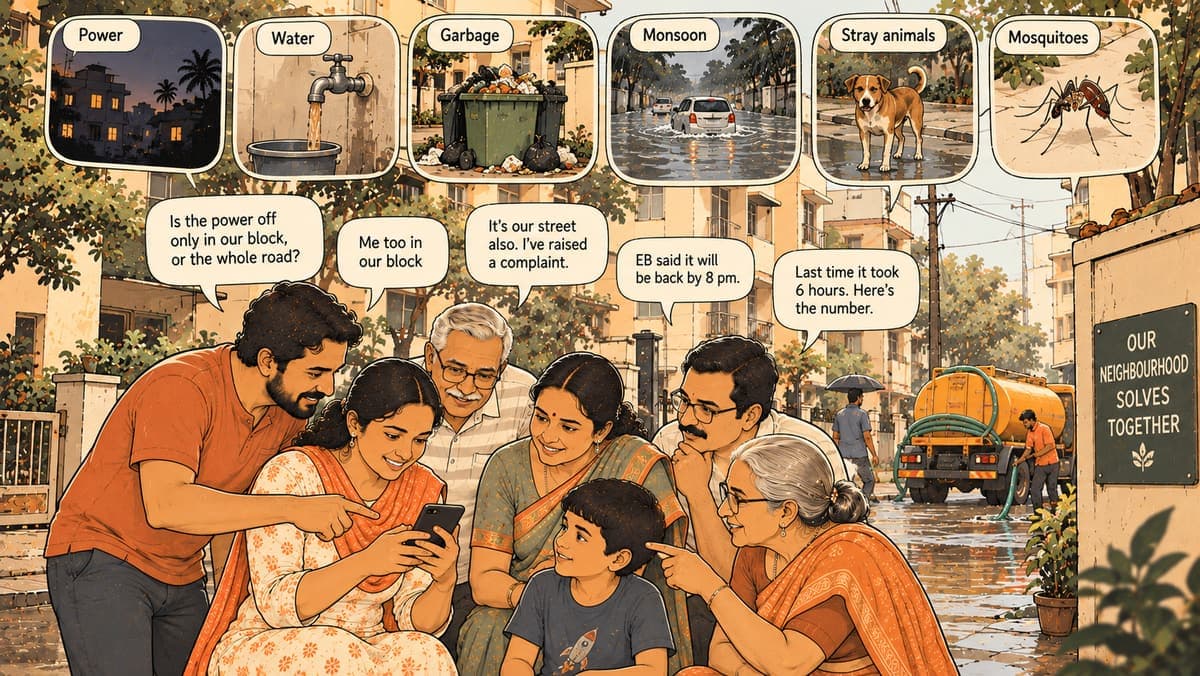
"Is the power off only in our block, or the whole road?"
That is one of the most common questions in any Chennai neighbourhood, especially in summer. It sounds small. But the moment five people answer "ours too", it stops being one family's problem and becomes a shared one. Someone checks with the EB office. Someone else knows the timing of the scheduled shutdown. By evening, the whole street knows what is happening and when it will end.
This is how a lot of local problems actually get solved. Not by one big meeting, but by an everyday question that reveals how many people are dealing with the same thing, and then pulls in the one or two who know what to do about it.
This article looks at that pattern: how ordinary questions surface shared problems, how a neighbourhood moves from "me too" to a solution, and how to keep that process calm and useful.
The problems that hide inside everyday questions
Many of the questions people ask each other are really early warnings. A few examples from a typical year:
- Water. "Is anyone else getting muddy water from the tap since Monday?" can be the first sign of a pipe problem that affects the whole lane.
- Monsoon. "How deep is the water near the subway this morning?" is a safety question for every OMR commuter during the northeast monsoon.
- Garbage. "Has the collection van come to 3rd Cross this week?" often uncovers a missed route that nobody reported.
- Stray animals and safety. "Did anyone else see a dog limping near the park?" can bring together the people who feed it and someone who knows a vet.
- Mosquitoes. "Is it just us, or are mosquitoes terrible this week?" can lead to finding a stagnant tank on an empty plot.
On its own, each question looks like idle chat. Taken together, they are how a neighbourhood notices things before they get worse.
From "me too" to "here's what we did"
The journey from a question to a solution usually has three stages.
1. Counting heads
The first useful thing a neighbourhood can do is simply show how many people are affected. Ten "me too" replies tell everyone this is not a one-house issue. That alone changes how seriously people take it, and it gives anyone who approaches the corporation or the building management something concrete to say.
2. Finding the person who knows
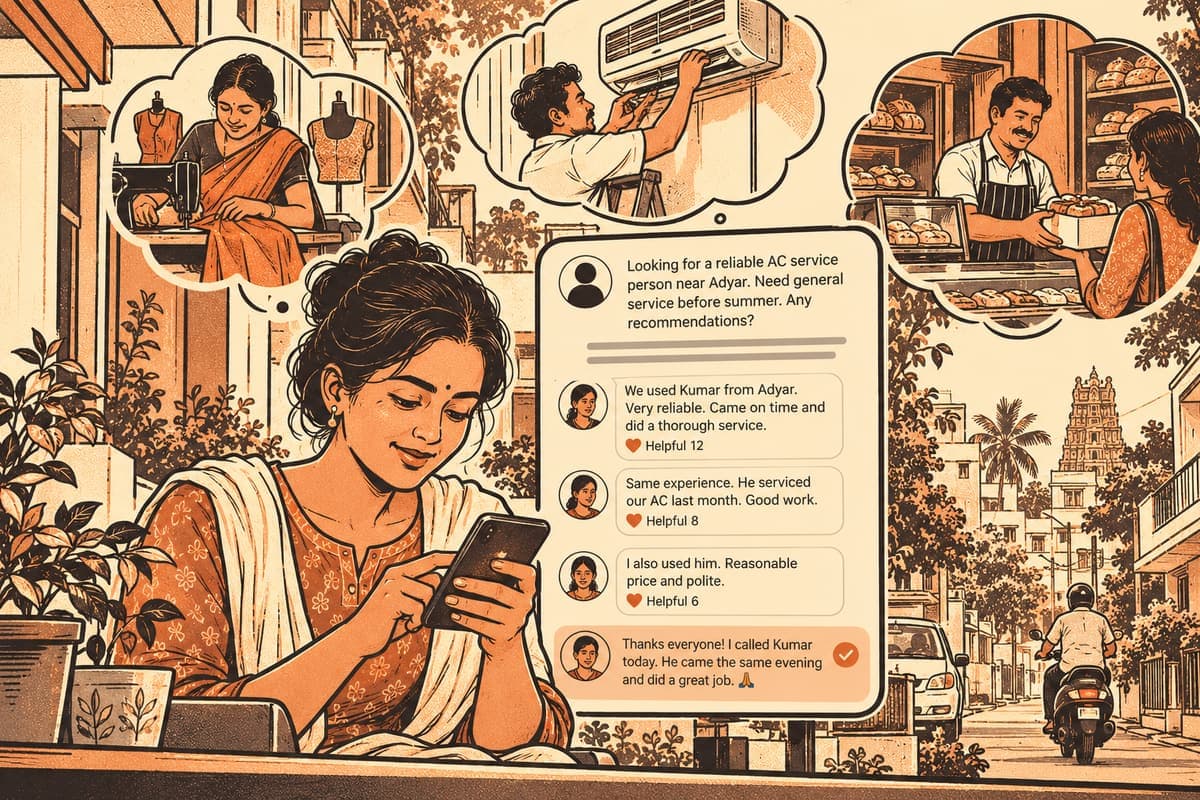
In almost every area there is someone who has dealt with this before. The retired gentleman who knows which ward office handles drain complaints. The resident who sorted out the same tanker problem two summers ago. A good thread pulls these people in, often because a neighbour tags them.
3. Writing down what worked
Once the problem is sorted, the most valuable thing anyone can do is write a short note: who was contacted, what was done, how long it took. Next monsoon, nobody has to start from zero.
Where Zinola fits
Zinola is a free neighbourhood app and website for Chennai, and several of its features match this pattern closely.
On the Home feed, the + menu has Ask a question and Need help. When you post, neighbours around you see it and can react. One of the six reactions is Me too, which is exactly the "count heads" signal: people can say "this is happening to us as well" without adding another reply to scroll past. The others are Helpful, Happy, Bad, Sad and Trash.
Answers neighbours agree with rise to the top, and the person who asked can mark the answer that sorted it. So when someone later asks "who do I call about the blocked drain on our road?", there is a settled answer waiting.
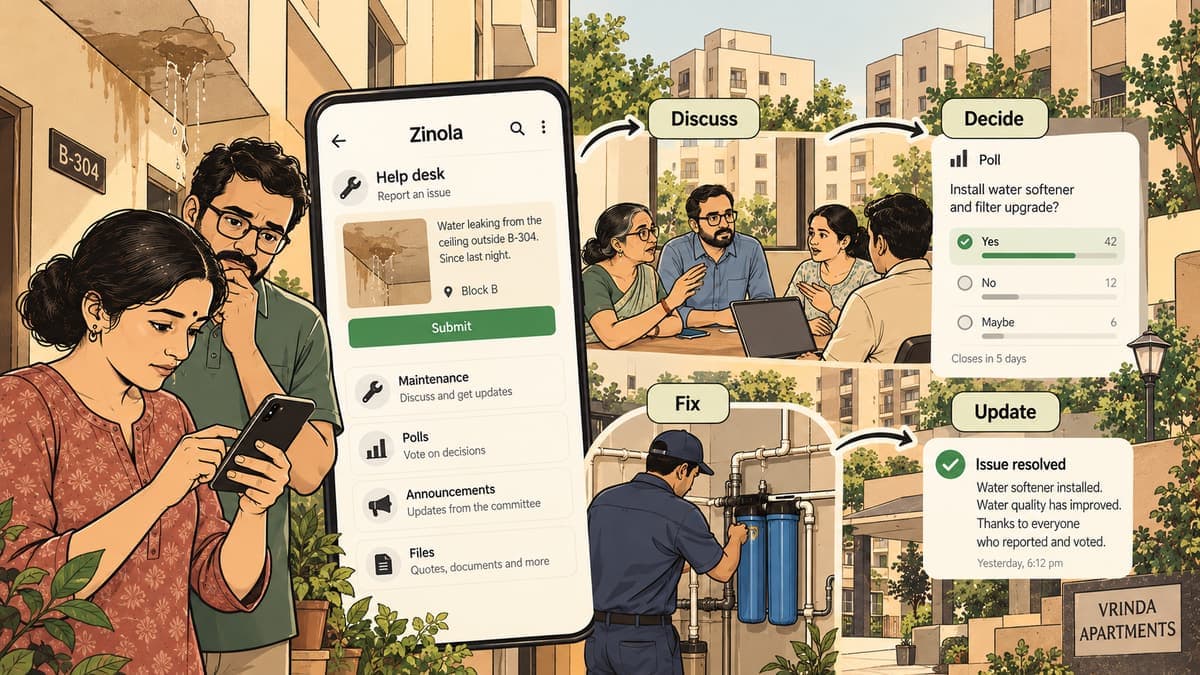
Inside a circle, such as an apartment or residents' association, there are tools for the problems that repeat:
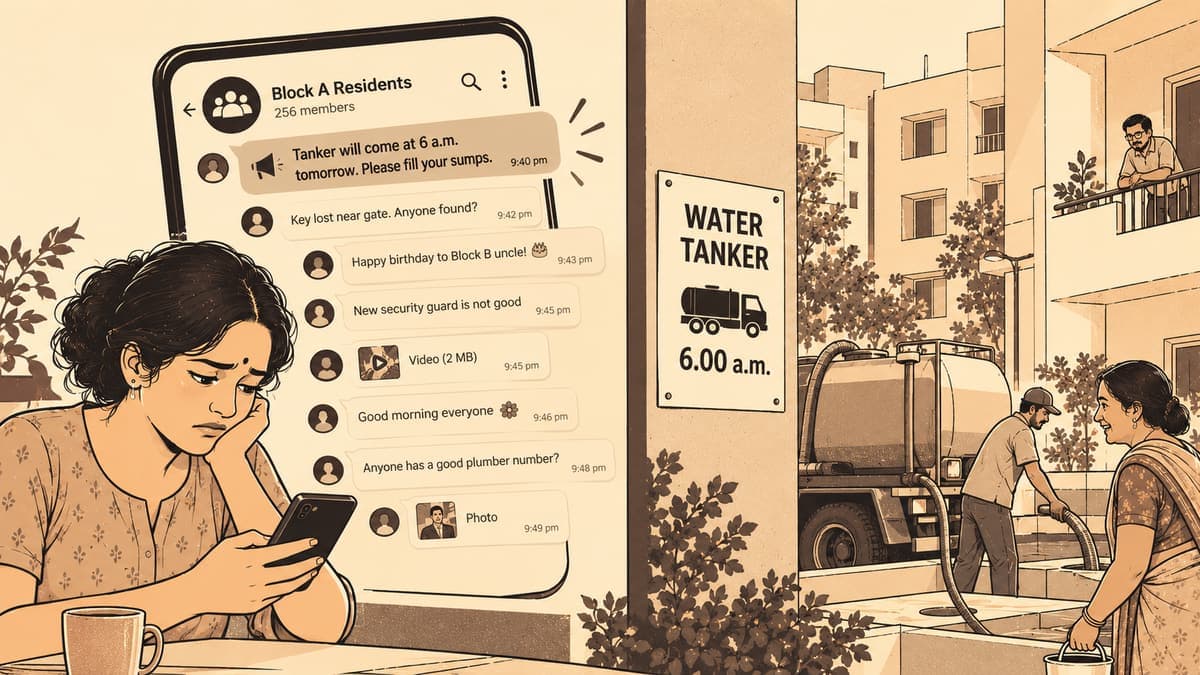
- Alerts & timings for power and water cuts, tanker timings, garbage and milk.
- Important numbers, so the electrician, the association office and the ward contact are in one place.
- A Help desk and Book a space in Apartment circles.
- Polls with a closing time, and in Apartment circles one vote per home, for decisions like "should we hire a second tanker this summer?"
- FAQ and Tips, where "what we did last time" can live permanently.
If your building runs everything through one busy chat today, starting a street on Zinola for RWAs and apartments explains how to set this up step by step.
Keeping it calm and useful
Shared problems can make people anxious, and a thread can turn into a complaint session very fast. A few habits keep things productive:
- Ask a clear question, not a vent. "Is anyone else without water since 7 am in Block C?" gets better replies than "This building is hopeless."
- Share facts you have checked. Forwarded rumours about "three days of no power" cause panic. Say where your information came from.
- Keep personal details out of public posts. Door numbers, phone numbers and names of people you are complaining about do not belong in a public thread. On Zinola, phone numbers are never shown on posts, and circles can keep conversations to members.
- Use reactions instead of repeat replies. A Me too reaction says the same thing as a reply and keeps the useful answers visible.
- Close the loop. When the water comes back, say so. When a complaint number actually worked, share it.
Why this matters beyond one problem
When a neighbourhood gets used to solving things together, something else happens: people start to know each other. The person who knew the ward office becomes someone you greet on the morning walk. The family who also lost water becomes the family you check on during the next cyclone warning.
That is the real value of local knowledge. It is not just a list of answers. It is the trust built every time a question gets a helpful reply. If you want to see how a single question can ripple outward, how local communities turn questions into useful answers walks through that journey from the first message to the marked answer. And for the bigger picture on resident groups acting together, from resident discussions to community action is worth a read.
Questions people ask
- How can neighbours tell if a problem affects the whole street?
- Ask a clear question and let people respond. On Zinola, the Me too reaction lets neighbours show they are affected without adding another reply.
- Where can an apartment keep power and water cut timings?
- Zinola circles have Alerts & timings for power and water cuts, tanker timings, garbage and milk, plus a place for important numbers.
- Can apartment residents vote on a decision?
- Yes. Circles can run polls with a closing time, and in Apartment circles there is one vote per home.
Set up your circle
Give your apartment or street one place for alerts, important numbers, polls and questions. Free on Zinola.
Start a circle