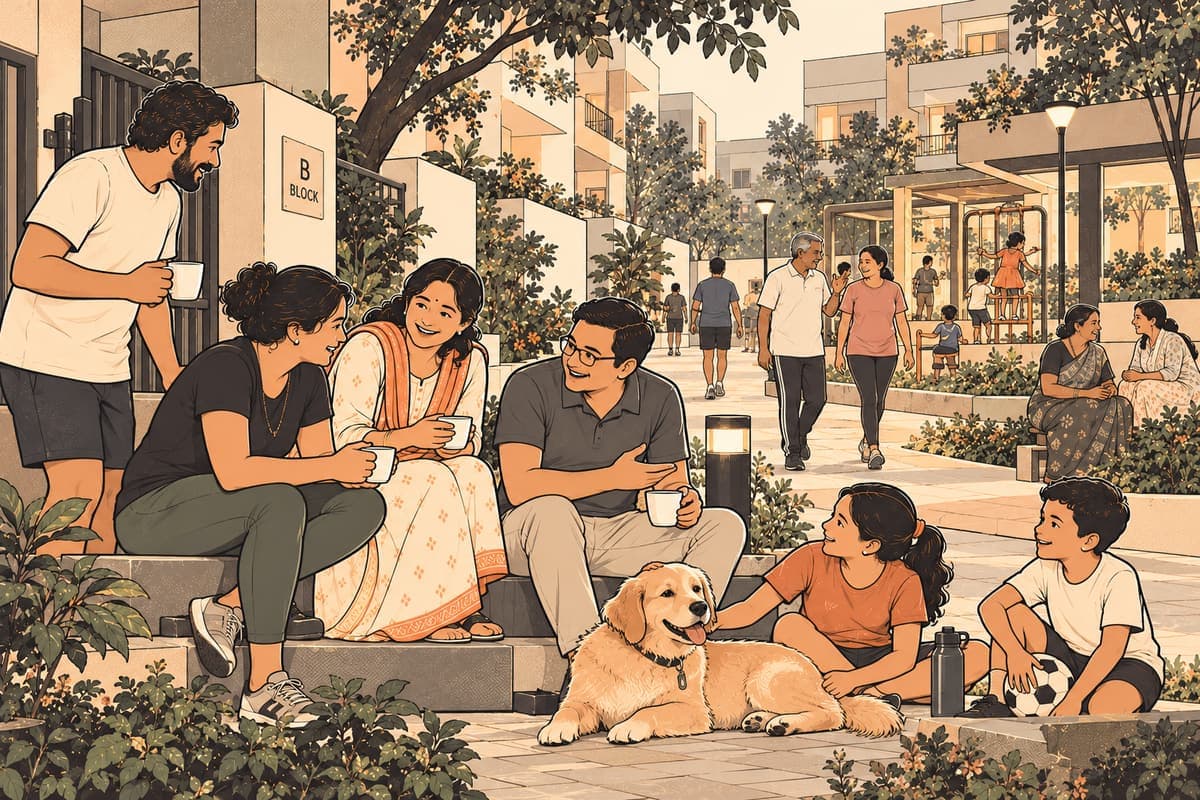
- Trust between neighbours grows in small steps, through favours offered, returned and promises kept.
- In the group chat, check before forwarding, stay on topic and take disagreements private first.
- Handle friction like parking or noise calmly, and respect boundaries, since a polite no is part of trust.
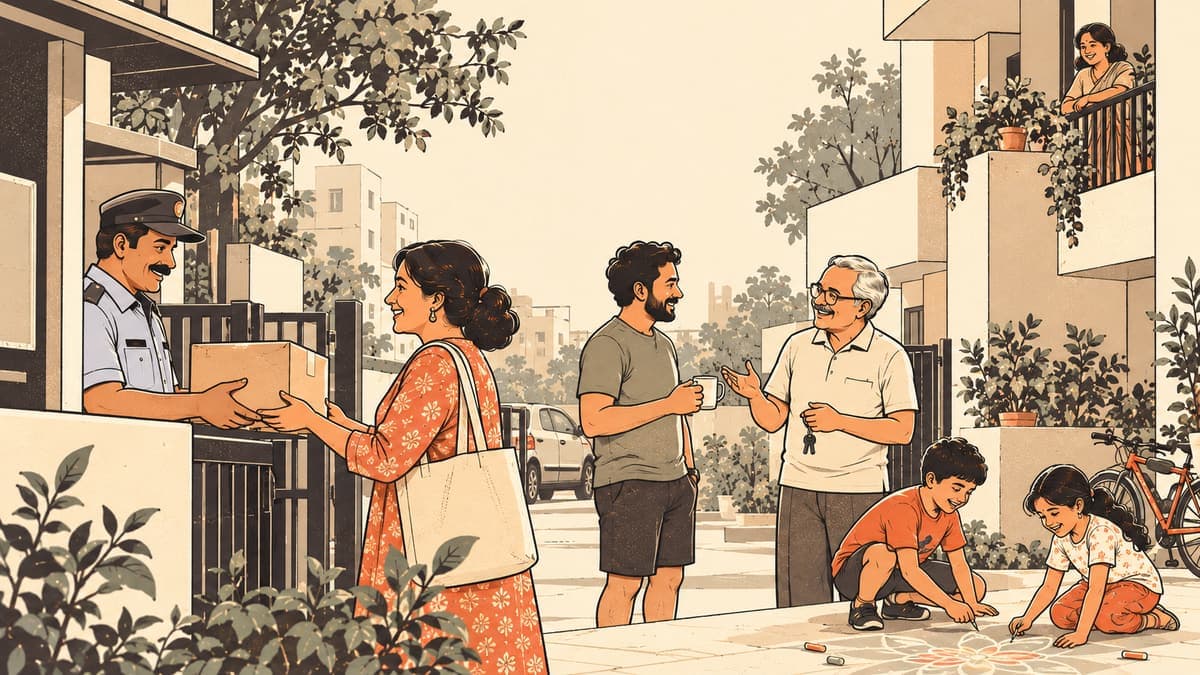
Trust between neighbours rarely starts with a big moment. It starts at the gate. A nod while you both wait for the lift. A "your parcel came, I kept it with the watchman". A shared grumble about the tanker being late again.
Over months, those small moments build into something you can lean on: a person you'd give your spare key to, whose children can play at your place, whose recommendation for a carpenter you'd accept without a second thought.
This is a practical look at how that trust grows, how it gets damaged, and how to repair it, whether you live in a gated community off OMR or a two-storey house in Perambur.
Trust grows in stages
It helps to think of neighbourly trust as a ladder. Each step is small, and you only move up when the step below feels solid.
| Stage | What it looks like |
|---|---|
| Recognition | You know each other's faces and nod hello |
| Names | You know their name, they know yours |
| Small exchanges | Lending sugar, taking in a parcel, sharing a tip |
| Reliability | They do what they say, and so do you |
| Real trust | Spare keys, kids, emergencies, honest advice |
Most neighbours stay on the first two steps forever, not because anyone did anything wrong, but because nobody took the next small step. You can usually be the one who does.
Small favours, kept promises
The fastest way up the ladder is a series of small favours, offered and returned.
- Offer before you ask. "I'm going to the Kilpauk market, need anything?" costs you nothing and opens a door.
- Ask for small things too. Letting someone help you is a sign of trust. A borrowed stepladder is a perfect first ask.
- Return things quickly and in good shape. A vessel returned with a few sweets in it, as many families do, says more than any thank-you.
- Keep promises, however small. If you said you'd water the plants while they were away, water the plants. Reliability is built out of exactly these moments.
- Be honest when you can't help. "I can't this weekend, but I can on Tuesday" builds more trust than a vague yes that never happens.
How you behave in the group chat matters too
Most neighbours now meet each other in a group chat long before they meet properly. What you write there shapes how people see you.
A few habits that build trust online:
- Check before you forward. A rumour about a theft or a water contamination scare can cause real panic. Share only what you know is true.
- Stay on topic. Good morning messages and political forwards wear people out. Useful information earns respect.
- Disagree in private first. If a neighbour's post bothers you, message or speak to them before replying in front of everyone.
- Give credit. When a neighbour's recommendation works out, say so in the group. It encourages others to share, and it shows you notice.
When trust is tested
Every neighbourhood has friction: a car parked across a gate, loud music during exams, a leaking pipe from upstairs, a dog that barks all night. How you handle these moments decides whether trust grows or breaks.
- Assume good intent first. Most problems come from carelessness, not malice. "I think you may not have noticed" goes a long way.
- Talk in person, calmly, and soon. Let a problem sit for weeks and it becomes resentment.
- Focus on the fix, not the blame. "Can we agree that cars stay clear of the gate after 8 am?" works better than listing past offences.
- Use the association when you need to. For shared issues like parking or maintenance, a fair process protects everyone's relationships.
- Apologise properly when you're wrong. A sincere apology, followed by changed behaviour, often leaves trust stronger than before.
Where Zinola fits
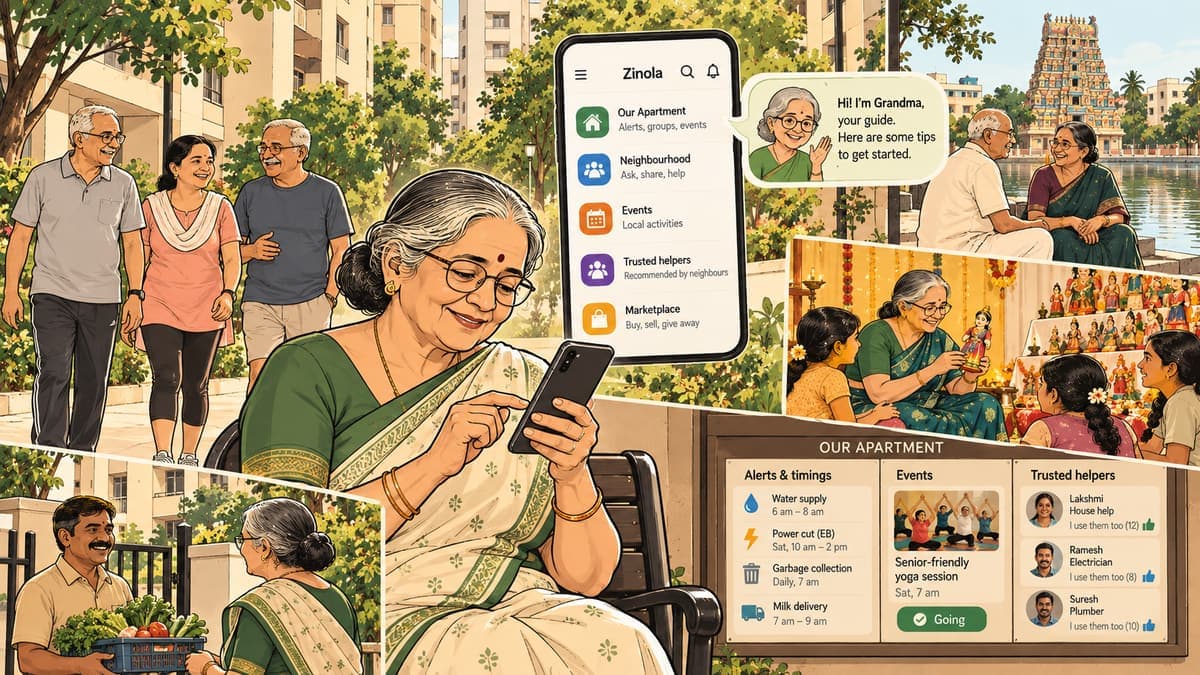
Zinola is a free neighbourhood app for Chennai. Several parts of it are designed around how neighbours actually build trust:
- Real people in real neighbourhoods. You pick your area, so the people you see on Home are from around you. Phone numbers are never shown on posts.
- Following first, then chatting. One-to-one chats only open between people who follow each other, and private accounts approve their followers. Conversations happen between people who have both chosen to connect. Find neighbours in the people directory.
- Commendations, not ratings. People can't be given star ratings. Instead they can receive commendations: Helpful, Welcoming, Reliable or Kind. They are a way to recognise exactly the behaviour that builds trust.
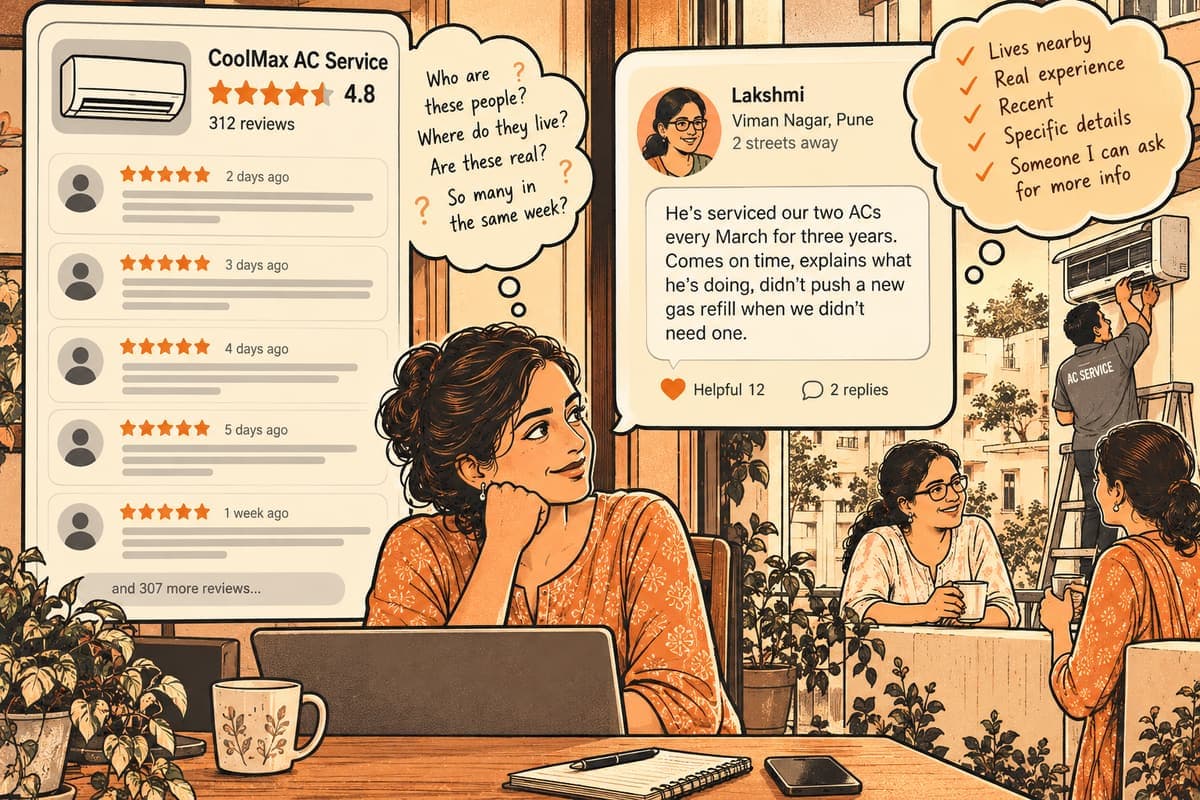
- Recommendations neighbours vouch for. In circles, the Trusted helpers board lists maids, plumbers and others that members vouch for with "I use them too", and their numbers are visible to members only. That vouching is useful, but it comes from neighbours, not from Zinola, so still do your own checks.
- Clear rules and tools. Circle owners can write rules of up to 3,000 characters. Anyone can block or report, and reported content is hidden after reports and reviewed by the team. The community rules apply everywhere.
For RWAs and apartments starting out, the guide to starting a street on Zinola walks through setting up a circle.
Boundaries are part of trust
Trust doesn't mean being available all the time. Good neighbours respect each other's space: they don't drop in at dinner time unannounced, they don't share what they were told in confidence, and they accept a polite no.
Setting your own boundaries kindly, and respecting theirs, makes the relationship safer for both of you. That is often when a neighbour stops being "the family in 3B" and becomes a friend.
If you'd like more on this, read the benefits of having local friends or browse the rest of our Safety & Trust articles.
Questions people ask
- How do you build trust with a new neighbour?
- Start with small, regular contact and small favours both ways, like taking in a parcel or lending a stepladder. Keep every promise, however small.
- How should I handle a dispute with a neighbour?
- Assume good intent, talk calmly in person soon, focus on a fix rather than blame, and use the residents' association for shared issues like parking.
- Who vouches for the Trusted helpers in a circle?
- Circle members do, by saying "I use them too". The vouching comes from neighbours, not from Zinola, so meet the person and do your own checks.
- What can I do if a neighbour is abusive on Zinola?
- You can block and report them. Reported content is hidden after reports and reviewed by the team.
Meet your neighbours properly
Follow the people around you, join your building's circle and grow trust one small step at a time.
Find neighbours