- Agree early on who the group is for, where you ride, how often and how open it will be.
- Grade rides so nobody gets dropped, and keep a short list of safety rules people can remember.
- Share the work through ride leads, sweep riders and a welcome person, and grow slowly to keep the warmth.
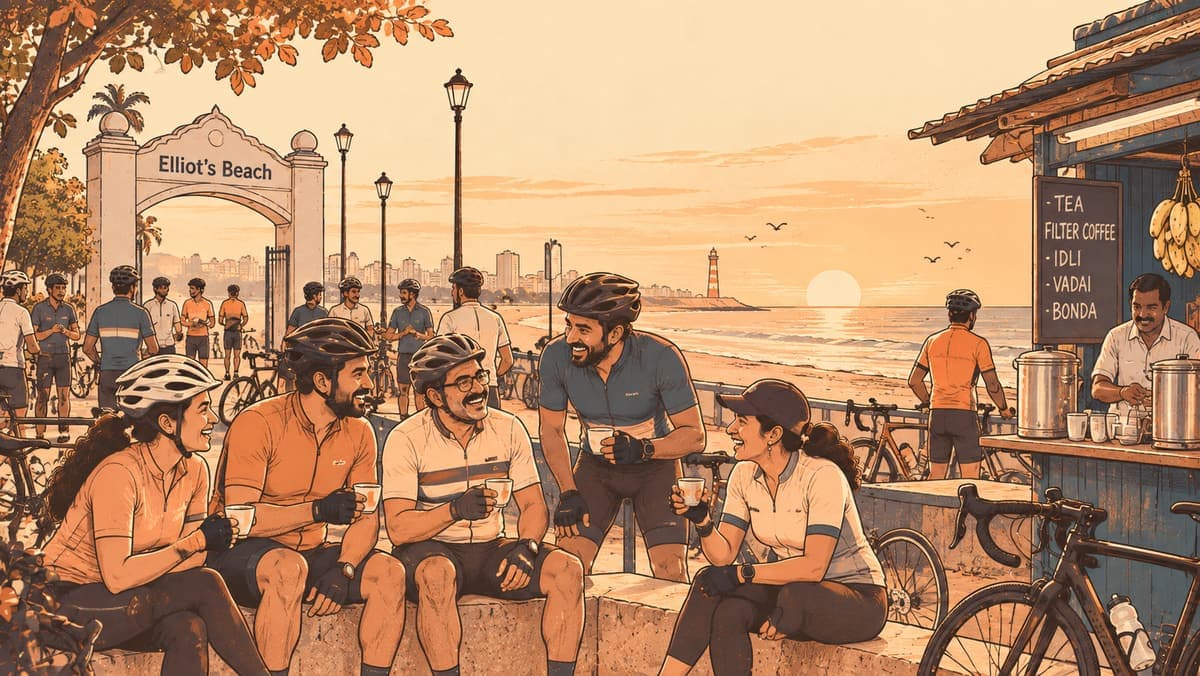
Three friends in Anna Nagar ride together every Sunday. Soon a colleague asks to join, then a neighbour's teenage son, then two people who saw them at Tower Park. Within a few months, there are thirty names in the chat, four different paces, and nobody quite sure who decides the route.
This is the moment when a set of cycling buddies either becomes a proper community or quietly falls apart. The difference is rarely about fitness or fancy bikes. It is about a little structure: clear rules, shared roles, a predictable rhythm and a way to welcome people who are not yet part of the inner circle.
This guide is for the person who has ended up as the "unofficial organiser". Here is how to build a riders' community in your part of Chennai that lasts.
Decide what kind of group you are
Before adding anyone else, sit down with your core riders and agree on a few basics. Write them down.
- Who is it for? Beginners, regular commuters, weekend long-distance riders, families with kids, or a mix?
- Where do you ride? A neighbourhood loop, the beach roads, ECR, the OMR stretch towards Kelambakkam, or a bit of everything?
- How often? One fixed ride a week is easier to sustain than four.
- How open? Anyone welcome, or only people from your area or workplace?
A group that knows what it is can say "this ride may not suit you, but try our Wednesday easy loop" without anyone feeling rejected.
Grade your rides so nobody gets dropped
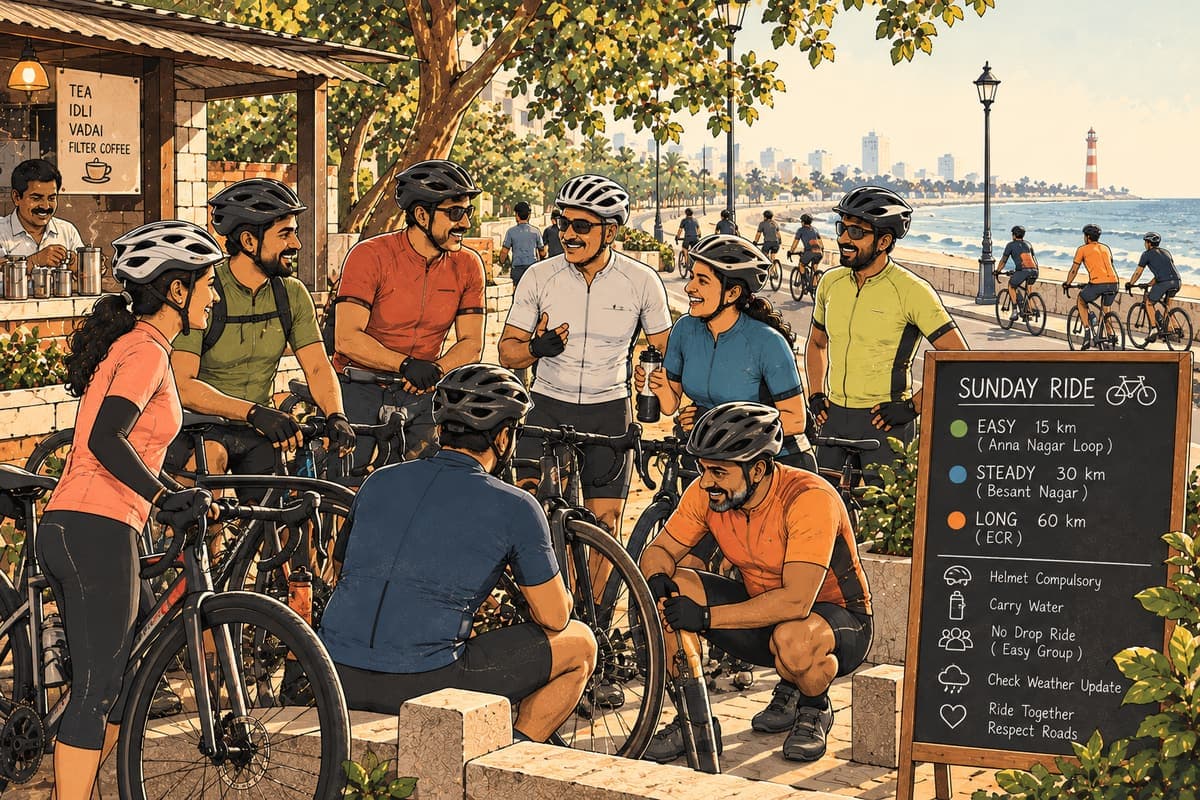
The most common reason people stop coming is that the ride was too fast, too long or both. Grading fixes this. A simple scheme is enough:
| Grade | Typical distance | Pace | Who it suits |
|---|---|---|---|
| Easy | 10–20 km | Chatty, frequent stops | New riders, kids, returning riders |
| Steady | 25–40 km | Comfortable, regroup at fixed points | Regulars |
| Long | 50 km and above | Faster, fewer stops | Experienced riders on ECR or OMR |
Mark every ride announcement with its grade. Make the easy ride a "no-drop" ride: the group waits for the slowest rider. Strong riders who want to push can do the long ride.
Write rules people can actually remember
Rules sound bureaucratic, but they protect the group. Keep them short and practical. A typical set for a Chennai riders' group might cover:
- Helmet compulsory. Lights for any ride before sunrise or after sunset.
- Single file on main roads. No riding three abreast on ECR.
- Follow the ride lead's call at signals; nobody jumps a red light.
- The sweep rider stays last. If you need to leave early, tell the sweep.
- Carry water, a spare tube and your phone with an emergency contact saved.
- Ride called off if there is heavy rain or a weather warning.
- Be kind in the chat. No selling unrelated products, no forwards.
Pin these somewhere new members will see them on day one.
Share the work before you burn out
A group run by one person depends on that person's mood, health and calendar. Spread the load early:
- Ride leads who know each route and set the pace.
- Sweep riders who stay at the back and handle punctures.
- A welcome person who greets newcomers and pairs them with a buddy for their first ride.
- A route keeper who maintains a list of routes, meeting points and tea stops.
- A moderator for the chat, to keep it friendly and on topic.
Rotate the ride lead and sweep roles so the same three people are not up at 4.45 a.m. every Sunday.
Where Zinola fits
Zinola is a free neighbourhood app for Chennai, and its circles are built for exactly this kind of group. When you start a circle, choose the "Interest club" kind. Then set it up to match the decisions above:
- Choose open, closed or invite-only. Open lets anyone read, which helps new riders find you. Closed keeps conversations to members. You can add optional join questions, like "Which grade of ride are you interested in?" or "Do you own a helmet?"
- Write your rules in the circle. There is room for up to 3,000 characters, enough for the list above and more.
- Give people roles. The owner can make trusted riders moderators to share the admin work.
- Split the chat into groups. Everyone is in General. You can add up to 20 groups, for example "Easy rides", "Long rides", "Repairs & gear" and "Kids on bikes". An admin-only Announcements group is handy for ride call-offs.
- Plan rides as circle events. Members tap Going, Maybe or No, and you can see how many are coming. Polls with a closing time settle route debates quickly.
- Invite with links or QR codes. Print a QR code for the bike shop counter or show it at the meeting point. Links can be limited or set to expire.
If you also host a ride that anyone in the area can join, such as a Sunday family ride, you can post it as a public event under the Sports or Meetup category, and it will appear in What's on for people nearby. Have a look at the events page to see how public events show up, or start your group from Circles.
Grow slowly and keep the culture
Growth is good, but a group that doubles in a month often loses its warmth. A few ways to grow without losing what made it special:
- Bring newcomers in through the easy ride, not the long one.
- Check in after the first ride. A short message asking how it went makes people far more likely to return.
- Keep an eye on the chat tone. If arguments about bike brands or routes get heated, a moderator can step in early.
- Hold an occasional non-riding meetup, like a Pongal breakfast or a monsoon-season bike maintenance afternoon. People who only know each other in helmets get to know each other properly.
For the social side of all this, and why small conversations matter so much, read how a riders' group turns everyday conversations into real connections. If your neighbourhood wants to bring people together beyond cycling, how to bring neighbours together through local events has ideas that work for any group.
A good riders' community does not need a logo, jerseys or sponsors. It needs a clear rhythm, a few shared rules and people who make the next rider feel welcome.
Questions people ask
- What rules should a cycling group have?
- Keep them short: helmets compulsory, lights before sunrise, single file on main roads, no jumping signals, a sweep rider at the back and rides called off in heavy rain. A Zinola circle has room for rules of up to 3,000 characters.
- What is a no-drop ride?
- A ride where the group waits for the slowest rider, so nobody is left behind. It is the best ride to bring beginners on.
- Can I split a riders' group by pace on Zinola?
- Yes. Inside a circle everyone is in General, and you can add up to 20 groups, such as Easy rides and Long rides.
- How do new riders join our circle?
- Share an invite link or QR code, send personal invites, or let people ask to join with optional join questions. Links can be limited or set to expire.
Set up your riders' circle
Pick the Interest club kind, add your rules and groups, and invite riders with a link or QR code. It is free.
Start a circle